
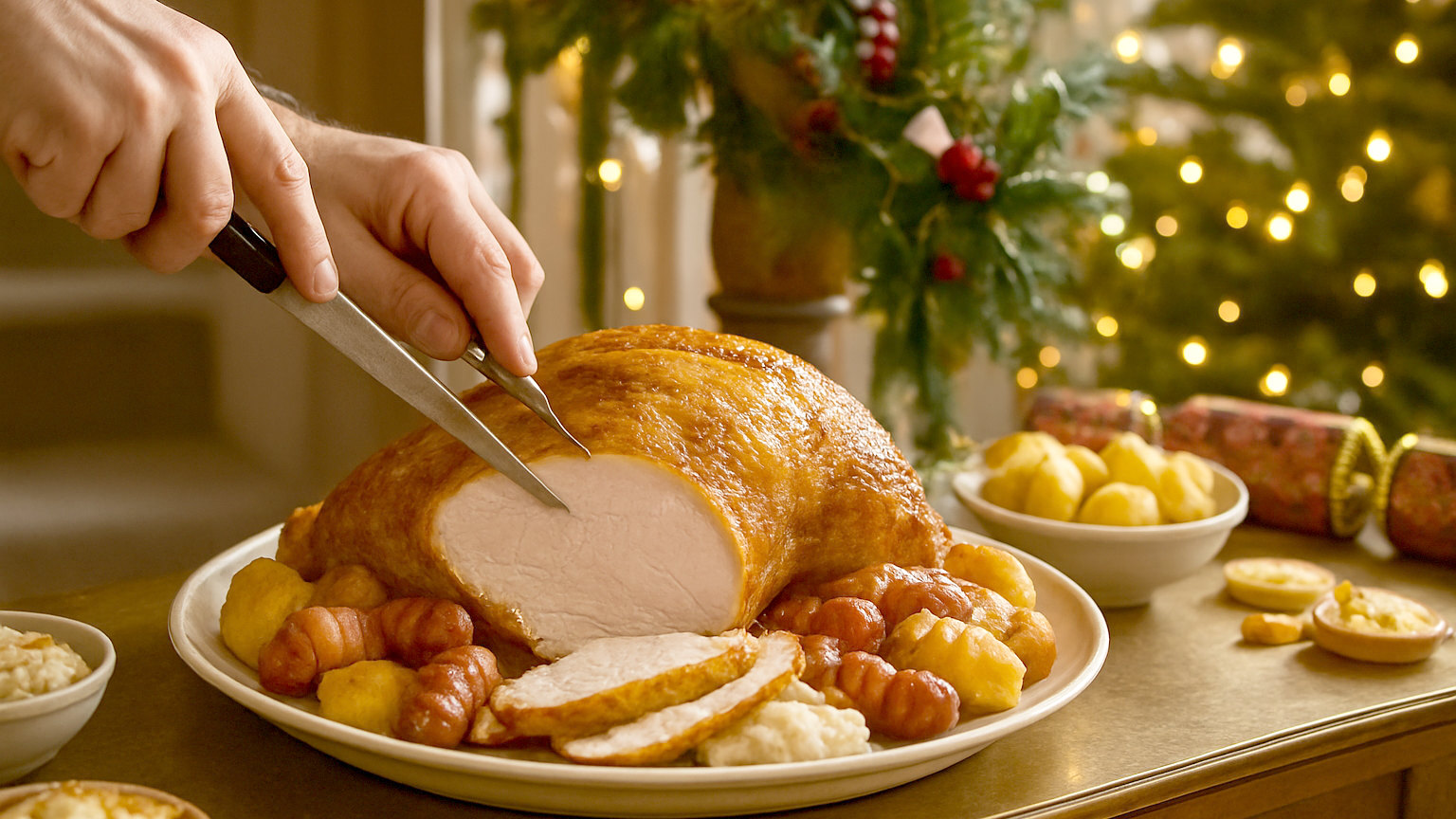
Twelve people is a different problem from six rather than a larger version of the same one. The bird gets bigger, but the oven does not, the table does not, and neither does the number of hands available at the critical moment. Almost every difficulty with a large Christmas dinner turns out to be a space or a timing constraint rather than a cooking one, which means the solutions are logistical.
Where do the constraints actually bite?
Oven capacity first, since a large bird occupies most of it and the potatoes need high heat afterwards. Then hob rings, of which there are four and you need six. Then plates, which almost nobody owns twelve matching ones of. Then table space, and finally the number of people who can usefully stand in a kitchen at once, which is two. Identifying which of these will bite is the whole of the planning.
How do you cook in stages?
Move everything that can be finished earlier out of the critical window. Cook a gammon the day before and serve it cold alongside the turkey, which adds a second meat without adding any oven time. Braise the red cabbage in November. Make the bread sauce and the gravy base ahead. By the morning, the only things that genuinely have to happen are the bird, the potatoes and the green vegetables.
What if the oven cannot cope?
Use every other heat source in the house deliberately. A slow cooker holds red cabbage or braised onions all morning. An air fryer does a full tray of parsnips or pigs in blankets independently. A microwave handles sauces. Steaming vegetables in a stack over one pan saves both rings and washing up. A neighbour oven is a genuine option that people are usually happy to offer if asked in advance.
Consider serving from the kitchen rather than at the table. Twelve people passing eight dishes to each other takes fifteen minutes and everything is cold by the end of it.
Should you plate up or serve family style?
For more than about eight, plating in the kitchen or laying the food out as a buffet is considerably better. It is faster, everything stays hot, portions can be matched to appetite, and it removes the scramble of dishes being passed across a crowded table. It is less traditional and it is what most restaurants and every large household eventually settles on.
How do you delegate properly?
Write names against jobs on the timing sheet in advance rather than asking for help on the day. Carving, gravy, drinks, laying the table, clearing between courses and washing up as it goes are all complete jobs that can be handed over entirely. A room of twelve contains at least four people who would rather be useful than sit down, and they need to be told what to do rather than asked whether they mind.
What about plates, glasses and chairs?
Count them in November, not on the day. Most supermarkets and off licences lend glasses free with a drinks order. Mismatched plates are entirely fine and nobody has ever commented. A second table pushed against the first, covered with one long cloth, reads as one table. Two smaller tables at right angles work better than trying to squeeze twelve around eight places.
How much extra food do you need?
Proportionally less than for a small group, which surprises people. Large gatherings graze more and eat less at the table, and there is always more food about than at a dinner for four. Work to the standard quantities of 500g of bone in turkey and 250g of potato per head, and resist the urge to add a margin on top of a number that already has one in it.
When should the plan be written?
Christmas Eve, backwards from the time you want to sit down, with the weight of the actual bird in front of you. Stick it to a cupboard door where everybody can see it. For a crowd this matters more than for a small table, because six people asking what they can do is itself a job, and a visible list answers all of them without you having to speak.


