
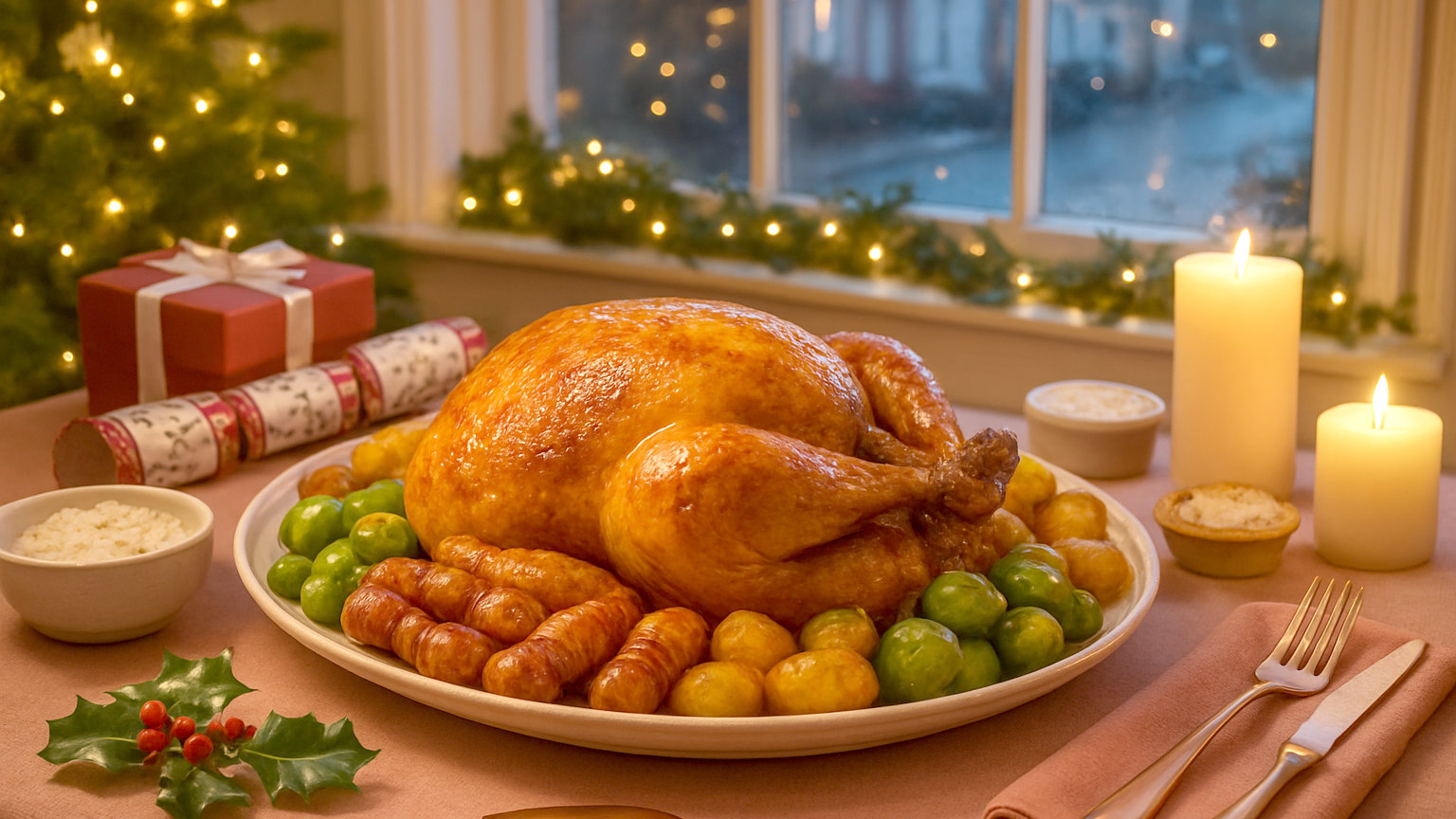
Turkey arrived in Britain in the sixteenth century and only became the standard Christmas bird during the nineteenth, displacing goose and beef. It is a convention rather than an obligation, and it has a real drawback: it is a very lean bird that dries out quickly and, for a small household, produces an alarming quantity of leftovers. Every alternative below is a legitimate Christmas dinner and several are considerably easier to cook.
What about goose?
The traditional English Christmas bird before turkey took over, and much richer. Goose renders an enormous amount of fat during cooking, which is worth keeping for roast potatoes through the following year. The drawback is yield: a goose has far less meat for its size than a turkey, so a 5kg bird feeds perhaps six people. It is also expensive. Cook at a high temperature initially, then lower, and pour the fat off as it collects.
Is beef a good Christmas roast?
Excellent, and it was the traditional dinner in many British households well into the twentieth century. A rib of beef on the bone is a genuine centrepiece, it can be cooked to a probe with complete precision, and the leftovers are better than turkey. It suits a table where somebody knows how they like their beef cooked, and it is the easiest of all these options to get exactly right if you have a thermometer.
What about ham?
A glazed gammon is the most useful thing on this list, because it can be cooked entirely the day before and served hot or cold. Simmer or bake it, remove the skin, score the fat, glaze with mustard and something sweet, and blast it in a hot oven for twenty minutes to caramelise. It feeds a crowd, it slices for days afterwards, and it takes no oven space on Christmas morning at all.
Anything cooked to a probe rather than a clock is easier than a turkey. Beef, lamb and pork all give you a precise target; a whole bird gives you an estimate.
Which options suit a small table?
Duck breasts, which are cooked individually in a pan in fifteen minutes and are genuinely festive. A chicken, which nobody should apologise for. Pork belly, which is cheap and spectacular if you get the crackling right. A single rib of beef. A whole baked fish or a side of salmon. For two or three people any of these is a better meal than a turkey crown, and none of them commit you to a week of leftovers.
How do the costs compare?
Turkey is generally the cheapest per head, which is a large part of why it won. Goose is the most expensive by a considerable margin. Rib of beef is expensive but not as much per portion as goose. Gammon is inexpensive and feeds a great many people. Pork belly and chicken are the cheapest of all. If cost is the deciding factor, gammon plus a chicken is a spread rather than a compromise.
What do the trimmings become?
Mostly the same, which is the reassuring part. Roast potatoes, sprouts, red cabbage, stuffing and gravy work with any of these. The adjustments are small: apple sauce and crackling with pork, horseradish and Yorkshire puddings with beef, and a sharper accompaniment with goose to cut the fat. Nobody has ever objected to a Christmas dinner on the grounds that the meat in the middle was different.
When should you tell everybody?
In advance, because Christmas dinner carries expectations and a surprise is not always welcome. Most people are perfectly happy once they know, and several will be relieved. If the household is divided, a smaller bird alongside a second meat covers both and is what many families quietly do anyway. Announcing it in November also means nobody arrives having told the children there will be turkey.
Can you cook two smaller things instead?
It is often the better answer for a mixed table, and it is what many households do without treating it as a decision. A chicken alongside a gammon covers everybody, costs less than a large bird and gives you two kinds of leftovers rather than one.
Two smaller items also cook faster and more evenly than one large one, which reduces the oven queue rather than adding to it.


