
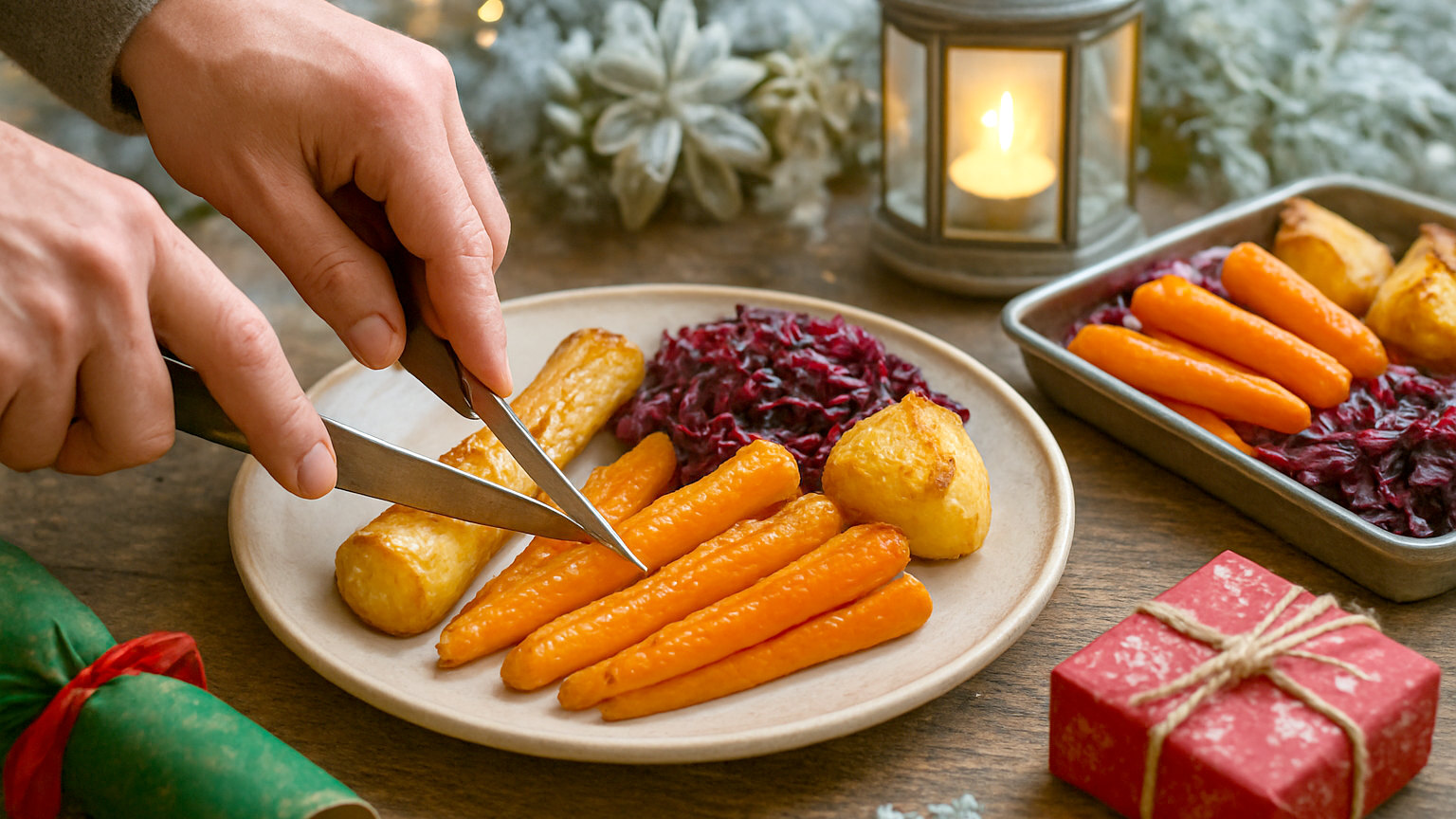
Most Christmas tables carry four or five vegetables and finish two of them. The rest are cooked out of obligation, take up hob space that is desperately needed, and go into the bin on the twenty-seventh. Choosing two or three that people actually eat, and cooking those properly, produces a better plate and removes a substantial amount of work from the busiest hour of the day.
How many do you actually need?
Three is plenty and two is defensible. A plate already carrying turkey, roast potatoes, stuffing, pigs in blankets, gravy, bread sauce and cranberry sauce does not have room for five vegetables, and the fifth one is there because it was there last year. Choose one green, one root and one braised thing, and the plate is balanced without being crowded.
What earns its place?
Roast parsnips, which are sweeter than potatoes and caramelise beautifully, and which almost nobody leaves. Braised red cabbage, which is made weeks ahead and cuts through the richness of everything else. Carrots roasted with honey and thyme rather than boiled. Sprouts done properly, meaning halved and browned rather than boiled to death. Any dark green vegetable cooked briefly, which the plate needs for freshness more than for tradition.
Which are worth more effort than they get?
Leeks braised slowly in butter and cream, which is a genuinely good dish and takes a pan on a low heat. Celeriac, roasted in chunks or mashed with potato. Roasted squash with sage. Cauliflower cheese, which is a Christmas staple in a great many households and is one of the best things on the table when it is made properly. Any of these repays the attention more than a fourth root vegetable does.
Roast the roots on a separate tray at high heat rather than boiling them. Browning is the difference between a vegetable people eat and one they push aside.
What can be cooked entirely in advance?
Red cabbage, which improves for being made a fortnight ahead and freezes perfectly. Cauliflower cheese, assembled the day before and baked on the day. Braised leeks. Anything mashed, which reheats well with a little extra butter. Roasted roots can be part cooked in advance and finished in a hot oven, which halves the time they need in the queue.
What has to be done at the last minute?
Anything green, which loses its colour and texture within twenty minutes of being cooked. Sprouts, beans, cabbage and greens all want cooking in the final five minutes and going straight to the table. This is one job rather than four, so keeping the last minute vegetable count to one is the single most useful decision in this whole area.
How do you keep them warm without ruining them?
Ideally you do not, and you time them instead. If something must wait, roasted vegetables hold reasonably well in a low oven uncovered, since the dry heat keeps them crisp. Boiled and steamed vegetables do not hold at all, and twenty minutes in a covered dish turns them grey and soft. Cover only what is already soft, such as braised cabbage.
How much should you buy?
Around 80g to 100g per person for each vegetable, which sounds small and is right when there are three of them alongside everything else. Buy loose rather than in bags sized for a family of six, which is where a substantial amount of Christmas food waste originates. Raw vegetables also keep for well over a week, so anything left is a January dinner rather than a bin.
Which ones do children actually eat?
Roast potatoes and carrots, reliably, and very little else. Trying to get a small child through five vegetables at a table full of exciting alternatives is a battle that nobody wins on Christmas Day.
Putting a small amount of one or two on the plate without comment works better than a negotiation, and the day is not the moment to make a stand about greens.


