
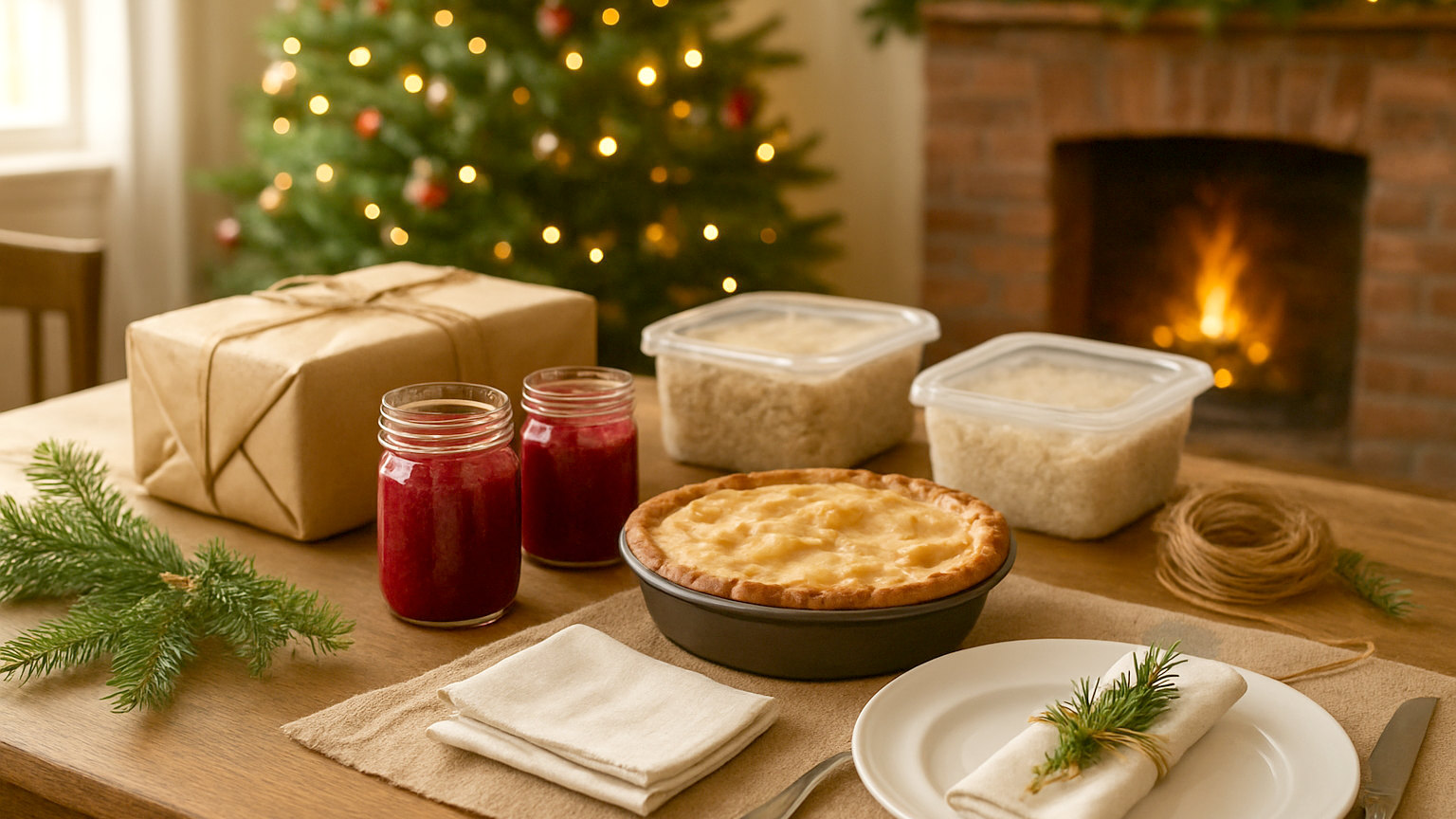
A surprising proportion of Christmas dinner does not have to be cooked in December at all. Roughly half the components either freeze without any loss of quality or keep for weeks in a jar, and doing them in November converts the busiest week of the year into an ordinary one. None of this requires any particular organisation beyond a list and one free afternoon.
What should you order first?
The bird, from a butcher, because the good ones are gone by early December and the collection slots fill before that. Order to a calculated weight rather than a round number. The same applies to a goose, a rib of beef or a gammon. If you are buying from a supermarket delivery slot, those open in November too and the useful times disappear within days of release.
What freezes without any loss?
Stock, which is the most valuable thing you can make in advance. Gravy base. Bread sauce. Cranberry sauce. Stuffing, uncooked, formed into balls or a loaf. Pigs in blankets, wrapped and open frozen. Mince pies and sausage rolls, assembled but unbaked, which go straight from freezer to oven. Pastry. Red cabbage, which improves for it. Between them these account for a large part of the cooking.
What keeps in a jar?
Cranberry sauce, for a fortnight in the fridge and months in the freezer. Mincemeat, which keeps for a year and is better for being made early. Pickled red cabbage. Flavoured salts and butters. Brandy butter, which keeps for weeks refrigerated. Anything preserved in sugar, vinegar or alcohol is doing what those ingredients exist to do, and making them in November is the traditional practice rather than a shortcut.
Label everything with what it is and the date it was made. An unlabelled container in a December freezer will not be trusted and will not be used.
How do you make the stock?
Roast a few turkey wings or a chicken carcass with an onion, carrot and celery until well browned, cover with water, and simmer for two or three hours. Strain, cool quickly and freeze in bags laid flat, which stack and defrost fast. Two or three litres covers the gravy, the soup after Christmas and a risotto in January. It is the single highest value hour of preparation available.
What about the cake and the pudding?
Both want making earlier still. A Christmas cake benefits from three or four weeks of feeding, which puts the deadline in late November. A pudding can be made months ahead and keeps for over a year if it is well made and stored properly. Mincemeat wants at least a fortnight to mature. All three are the traditional November jobs and all three genuinely improve rather than merely surviving.
What cannot be done ahead?
Roast potatoes, which can be par-boiled and roughed up in advance but must be roasted on the day. The bird itself. Anything green. Yorkshire puddings, which can be frozen but are noticeably better fresh. Gravy needs the roasting juices, so the base is made ahead and the finish happens during the turkey rest. Everything else on the plate is fair game.
When should you do the shopping?
Non perishables and drink in late November, when the offers are running and the shelves are complete. Frozen goods whenever convenient. Vegetables, bread, cream and anything fresh in the last three or four days, since they will be better for it and the shops do not run out of carrots. Splitting the shop into three trips rather than one enormous one also spreads the cost across two pay cheques.
What should you write down?
A list of what is in the freezer, stuck to the freezer door, and a running note of what has been bought. Both sound excessive in November and are the two things that prevent duplicate shopping in the final week.
It is also worth writing next year notes as you go: the weight of bird that turned out to be right, what nobody ate, and what ran out. Ten minutes on Boxing Day saves an hour the following November.


