
The traditional instruction is to steam a Christmas pudding for two or three hours, which is accurate and also occupies a hob ring you almost certainly need for something else. It is not the only method, and for a bought pudding or a small one, it is not necessarily the best. What matters is that the pudding is heated all the way through, since a cold centre is the usual failure and is obvious at the first spoonful.
How long does steaming take?
Around two hours for a standard pudding of about a kilogram, and up to three for a larger one. Cover the basin with pleated parchment and foil tied with string, stand it on a trivet or an upturned saucer in a large pan, and pour in boiling water to come halfway up the sides. Keep it at a steady simmer and check the water level every half hour, because a pan boiling dry is the one genuine hazard in this method.
Can you use the oven instead?
Yes. Stand the covered basin in a roasting tin, pour boiling water into the tin to come halfway up, cover the whole tin with foil, and heat at around 150C for about an hour and a half. It is effectively the same method using a different heat source, and its advantage is that the oven is often free after the potatoes have come out while the hob is not.
Does the microwave work?
It works well and takes a few minutes rather than a few hours, which on Christmas Day is a substantial argument in its favour. Follow the timing on the packet for a bought pudding. For a homemade one, cover loosely, heat in short bursts at medium power, and stand it for several minutes afterwards so the heat evens out. The texture is very slightly different but the difference is smaller than the fuss suggests.
Warm the brandy in a small pan before lighting it. Cold spirit will not catch, and pouring more onto a pudding that has not lit is how accidents happen.
How do you know it is heated through?
Push a skewer into the centre, leave it for a few seconds and touch it to your wrist. If it is hot, the pudding is ready; if it is warm, it needs longer. A probe thermometer reading around 70C at the centre does the same job more precisely. Judging by time alone is unreliable, because puddings vary in density and a fridge cold pudding takes noticeably longer than one at room temperature.
How do you flame it safely?
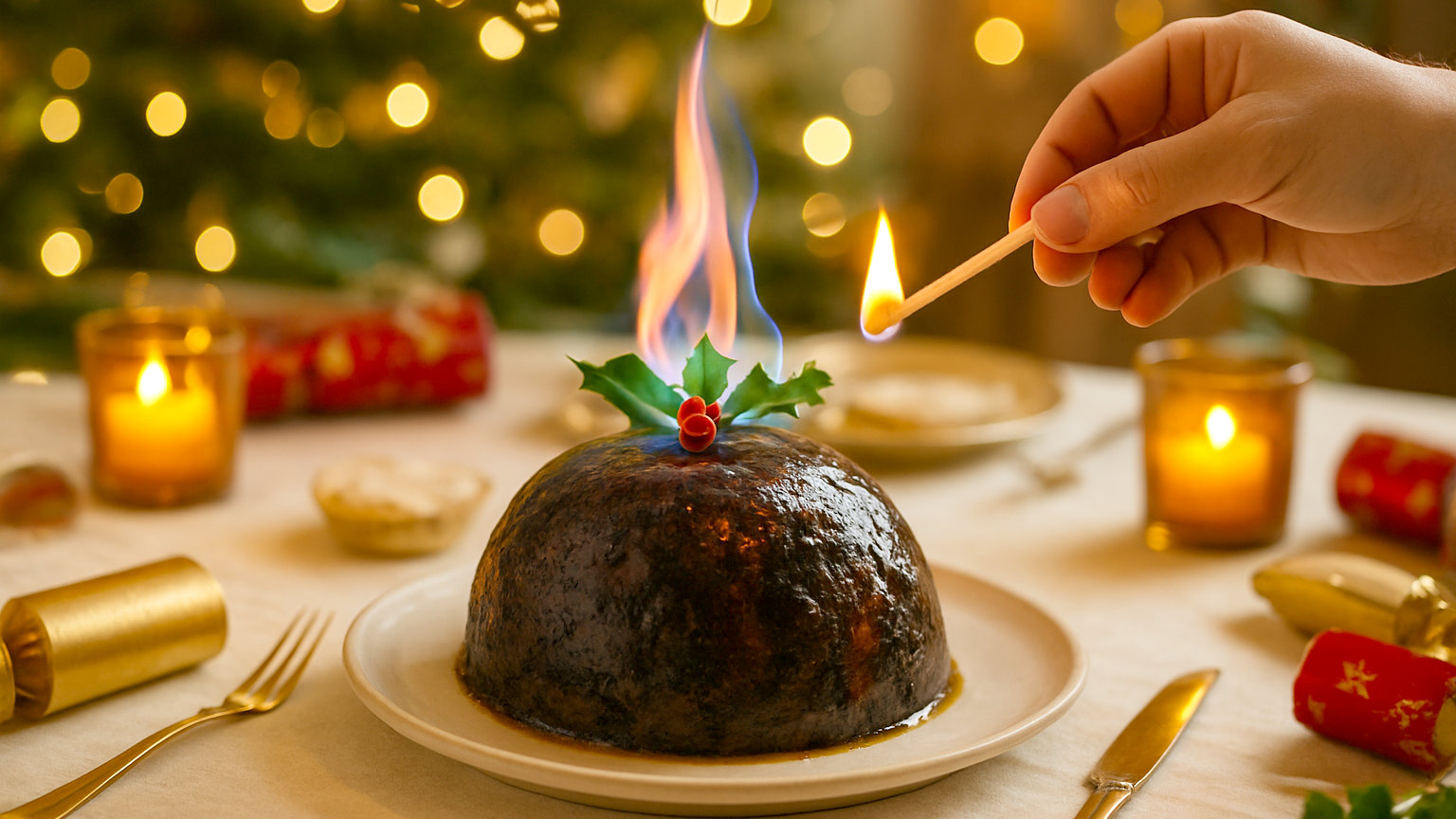
Warm three or four tablespoons of brandy in a small pan until it is hot but not boiling, take the pudding to the table first, then light the brandy in the pan and pour it over. Turn the lights down but not off, keep hair, sleeves, paper hats and decorations well clear, and never pour from the bottle. The flame is nearly invisible in a bright room, so let it burn out fully before anybody reaches across it.
What if you have no pudding basin?
A heatproof bowl works for steaming, as does a foil pudding basin. If the pudding is already out of its basin, wrap it in parchment and then foil and steam or oven heat it as a parcel. A slice can be reheated individually in a microwave for less than a minute, which is by far the easiest option for the third or fourth serving on Boxing Day.
How long does it keep afterwards?
An unopened, well made and well fed pudding keeps for months in a cool dark cupboard, and many households deliberately keep one for the following year. Once heated, the remainder should be cooled quickly, refrigerated and eaten within a few days. Individual slices fried in butter until the edges caramelise are considerably better than most people expect and are the best possible use of the last of it.


