
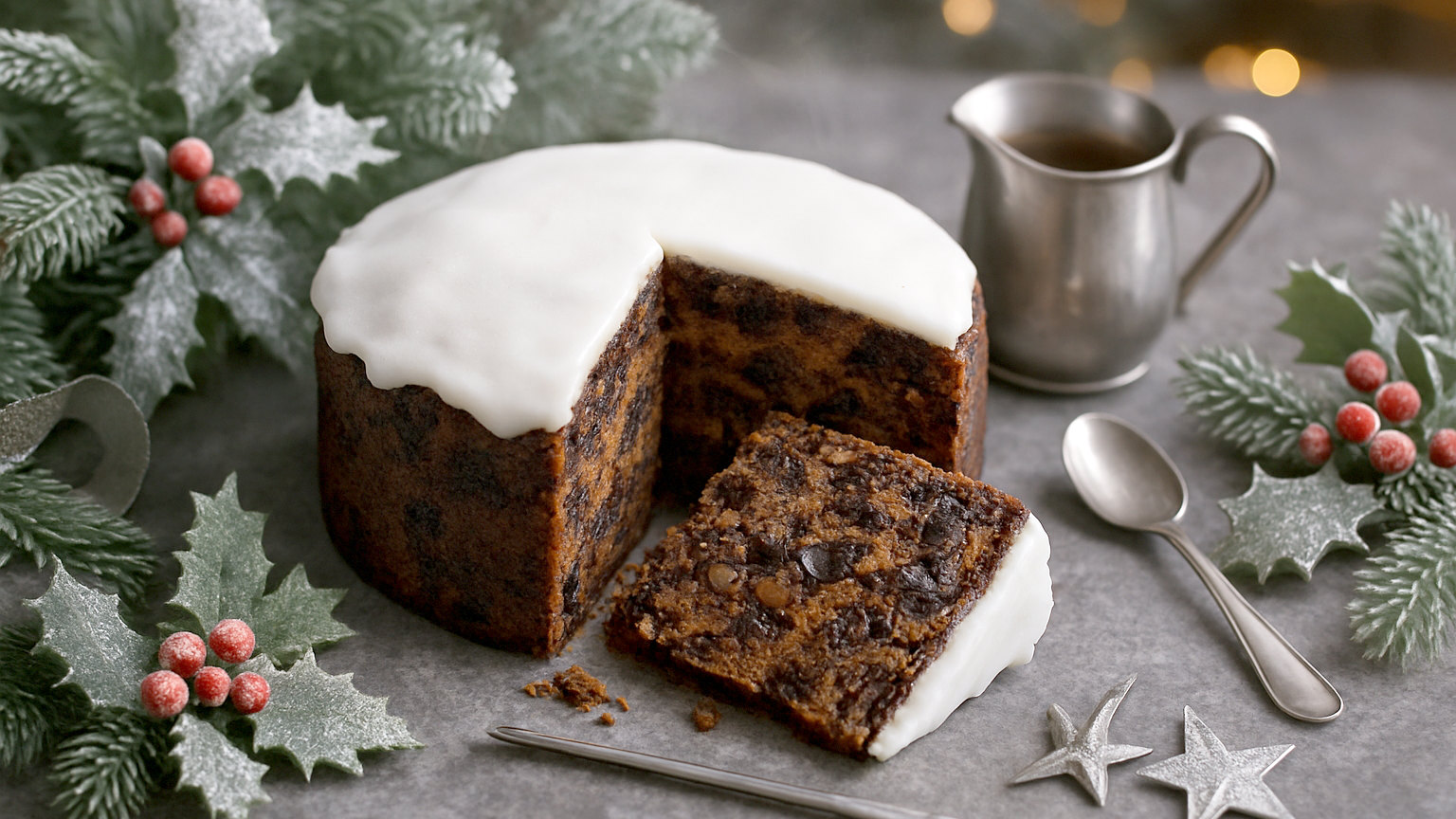
The traditional date is Stir-up Sunday, the last Sunday before Advent, which falls in late November. Many people make theirs earlier, in October, on the basis that longer is better. Both are fine, and neither is compulsory. A cake made in the second week of December is not ruined, it is simply a younger cake, and there are several things that can be done to close the gap.
Why is a fruit cake made so far ahead?
Because time does two things. It allows the flavours of the dried fruit, spice and alcohol to combine rather than sitting alongside each other, and it allows repeated feeding, which is what makes a mature cake moist rather than merely damp. Neither of those happens in a week. A cake made in October and fed monthly is noticeably different from one made a fortnight before Christmas, though the difference is smaller than tradition suggests.
How does feeding work?
Once the cake is cool, pierce the top several times with a skewer and spoon over a tablespoon or two of brandy, rum or whisky. Wrap it in baking parchment and then foil and store it somewhere cool and dark. Repeat every two to three weeks. The alcohol is a preservative as well as a flavour, which is why a well fed cake keeps for months. Overfeeding produces a soggy cake, so a tablespoon at a time is the right scale.
How long does it actually need?
Three to four weeks of feeding gives most of the benefit, which puts the sensible deadline in the last days of November. Beyond about two months the improvement slows considerably. A cake made two weeks before Christmas and fed twice will be perfectly good, and most people at the table would not identify it as young if nobody mentioned it.
Wrap in parchment first, then foil. Foil directly against a fed cake can react with the alcohol and the fruit acids and taint the surface.
What if you have left it very late?
Soak the dried fruit overnight, or for a few hours in gently warmed alcohol, before mixing. That does much of the work maturation would have done and is the single most effective shortcut available. Feed the cake as soon as it is cool and then again every few days rather than every few weeks. A boiled fruit cake, where the fruit is simmered with the liquid before mixing, is the traditional answer to lateness and is genuinely good.
When should the marzipan and icing go on?
Marzipan about a week before Christmas, and royal icing a day or two after that, so the marzipan has dried enough not to stain the icing with almond oil. If you are using ready to roll fondant rather than royal icing, both can go on together a few days ahead. Do not marzipan a cake you intend to keep feeding, since the alcohol has nowhere to go and the surface goes wet.
How should it be stored?
Cool, dark and airtight, wrapped in parchment and foil inside a tin. Not the fridge, which dries it. Not a warm cupboard next to an oven. A well made and well fed cake keeps for several months and improves for much of that, which is why some households genuinely make next year cake in January when the dried fruit is reduced.
Can it be made without alcohol?
Yes, using cold tea, apple or orange juice for soaking and feeding. It will not keep as long, since the alcohol is doing preservative work, so make it closer to Christmas and store it in the fridge if it is going to sit for more than a few weeks. The flavour is different rather than worse, and strong tea in particular gives a very good result with the dried fruit.
Which fruit and spices should you use?
Whatever combination you like, within a total dried fruit weight of around a kilogram for a standard 20cm cake. Sultanas, raisins and currants form the base, with glace cherries, mixed peel, apricots, figs or dates as variations, and the traditional mixed peel is the ingredient most often left out by people who dislike it.
For spice, a teaspoon each of mixed spice and cinnamon plus a grating of nutmeg is a sensible starting point. Ground spice loses its strength within a year, so a jar that has been in the cupboard since the last cake is worth replacing.


