
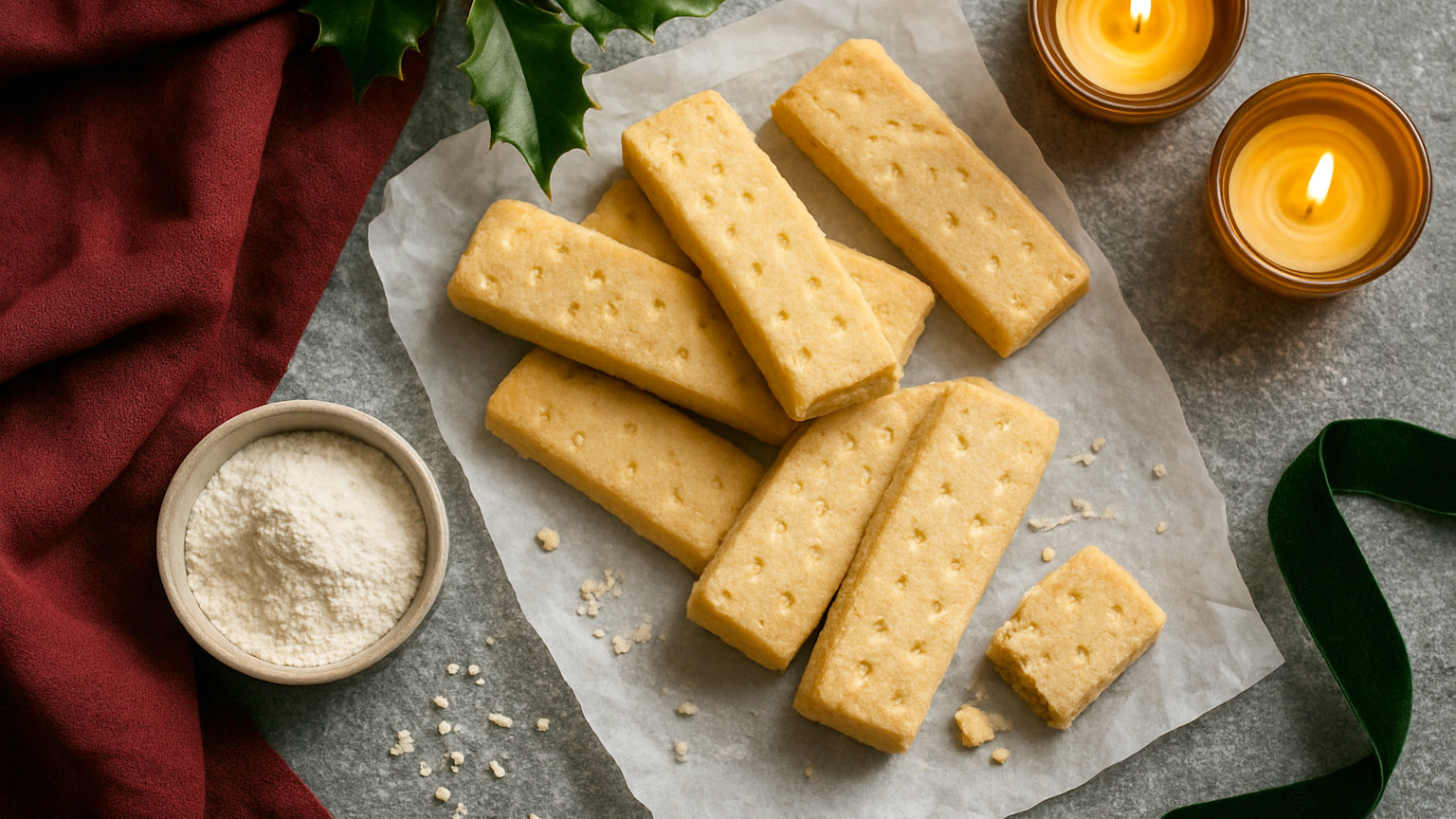
Shortbread contains flour, butter and sugar, and it still goes wrong regularly, which tells you the technique matters more than the ingredients. The common failures are a biscuit that is tough rather than short, one that spreads into a puddle, or one that is soft within a day. All three come from the same handful of causes, and none of them require any skill to avoid.
What is the classic ratio?
Three parts flour, two parts butter, one part sugar by weight, which for a standard batch means 300g, 200g and 100g. That is the traditional Scottish proportion and it works. Some recipes push the butter higher for a richer result, which spreads more and needs chilling. Weighing rather than using cups matters here more than in most baking, because the ratio is doing all the work.
What is the rice flour for?
Texture. Replacing around a quarter of the plain flour with rice flour, semolina or cornflour gives the characteristic sandy short bite rather than a smooth biscuit. Rice flour has no gluten, so it interrupts the structure and keeps the shortbread from becoming bready. It is not essential, but it is the difference between a good shortbread and a very good one, and it costs almost nothing.
Why does overworking ruin it?
Because working the dough develops gluten, and gluten makes it chewy. Shortbread should be brought together with as little handling as possible: rub or beat the butter and sugar, add the flour, and stop the moment it comes together into a mass. It will look slightly crumbly and that is correct. Kneading it smooth, which feels like the right thing to do, produces a tough biscuit.
Bake it low and slow, at around 150C, until it is pale gold at the edges and no more. A hot oven browns the outside before the middle has dried, which is why shortbread goes soft the next day.
How long should it bake?
Between 35 and 45 minutes at 150C for a thick slab, less for thin biscuits. It should be barely coloured, a pale sand rather than golden brown. The purpose of the long low bake is to dry the biscuit out rather than to brown it, and drying is what keeps it crisp for a fortnight. If it is browning, the oven is too hot regardless of what the dial says.
When do you cut it?
Score the portions before baking, then cut through properly within a few minutes of it coming out of the oven while it is still soft. Left to cool completely it will shatter unpredictably. Prick the surface with a fork before baking too, which lets steam escape and stops the middle rising. Then leave it in the tin until completely cold, since warm shortbread is fragile.
How should it be stored?
Airtight, at room temperature, and completely cold before it goes in the tin, since any residual warmth creates steam and softens it. Kept properly it holds for two weeks and often longer. Do not store it with soft biscuits or cake, which give up moisture that the shortbread will absorb. If it does soften, ten minutes in a low oven dries it out again completely.
What can you add to it?
Very little, which is the point, but a few things work. Lemon or orange zest. Ground almonds replacing a little of the flour. Chopped rosemary, which sounds odd and is excellent. A dip in dark chocolate once cool. Demerara sugar pressed onto the edges. What does not work is anything wet, since moisture is precisely what you spent forty minutes in a low oven removing.
Why did yours spread in the oven?
Because the butter was too soft when the dough was made, or the shapes went into the oven warm. Chilling the cut shapes on the tray for twenty minutes before baking fixes it completely.
A dough with a higher butter ratio spreads more by design, so if you are using a rich recipe rather than the classic three two one, chilling is not optional.


