
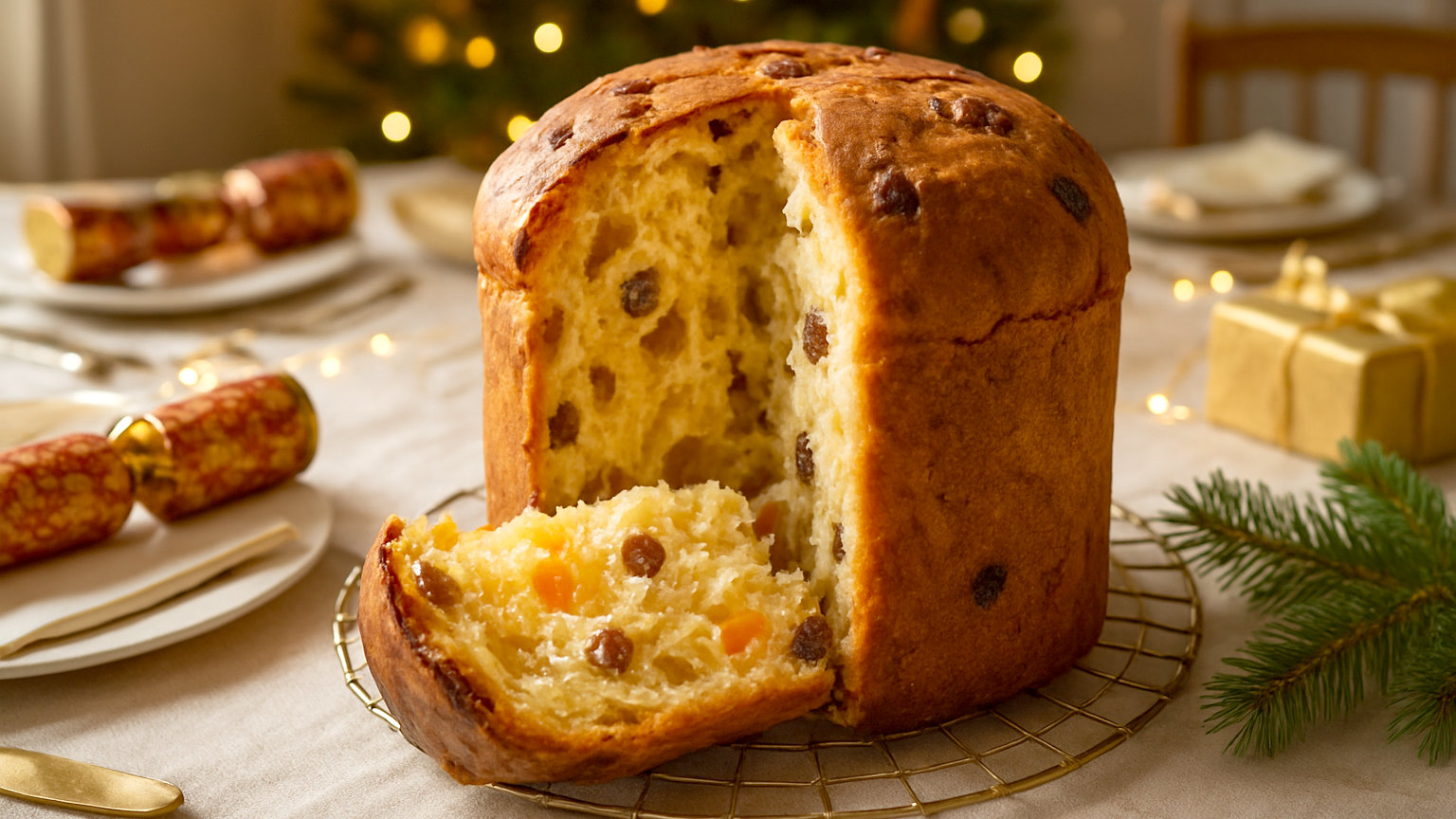
Panettone is the most technically demanding thing in the Christmas baking repertoire, and anybody who tells you otherwise has made something else. It is a very wet, very enriched dough given an extremely long fermentation, and it takes two days from start to finish. It is also genuinely worth attempting once, and the result is nothing like the boxed version most people know.
Why does it take two days?
Because the flavour comes from a long slow fermentation rather than from the ingredients, and because the dough is built in two stages with a rest of ten to twelve hours between them. The first dough is mixed in the evening and left overnight. The second stage adds more butter, sugar, eggs and the fruit, and then needs several hours of proving before it goes anywhere near an oven.
How wet is the dough?
Wetter than anything most home bakers will have handled. It is closer to a thick batter than to a bread dough at the start, and it only becomes recognisable as dough after a long period of mixing develops the gluten. The instinct is to add flour, and adding flour is what produces a dense, dry panettone. A stand mixer with a dough hook is close to essential, and even then it takes twenty minutes or more.
What is the upside down cooling for?
Structure. The crumb is so light and so full of air that a hot panettone will collapse under its own weight as it cools. Skewers are pushed through the base of the paper case and the whole loaf is hung upside down between two chairs or over a deep pan for several hours. It looks absurd and it is the difference between a tall open crumb and a sunken one.
Do not add flour when the dough looks too wet. Keep mixing; it comes together, and the wetness is the entire reason for the open crumb.
Do you need a starter?
Traditional Italian panettone uses a stiff sourdough starter maintained specifically for it, which is a serious commitment. A commercial yeast version with a long fermentation gives a very good result and is what almost every home recipe uses. It will not be identical to a bakery loaf made with a decades old starter, but the difference is smaller than the difference between a home version and a supermarket box.
What goes into it?
Strong flour, egg yolks in quantity, butter, sugar, and traditionally candied orange and citron with raisins soaked in rum. Chocolate versions are common and entirely acceptable in Italy despite what purists say. The proportion of butter and yolks is what makes it rich, and it is also what makes it slow, since fat inhibits gluten development and slows the yeast.
Is it worth attempting?
Once, if you enjoy bread making and have a free weekend and a stand mixer. It is a genuinely difficult bake with several stages where it can go wrong, and a first attempt frequently produces something dense. It is not a sensible project for a busy December, and it is a very good one for a quiet weekend in November when you can afford for it not to work.
How long does it keep?
Considerably longer than an ordinary bread because of the fat content, but days rather than weeks, which is the opposite of stollen. Wrap it well once cool. Day old panettone is very good toasted, and by the third or fourth day it makes the best bread and butter pudding or trifle base you will ever produce, which is a useful thing to know about the boxed ones as well.
What is the boxed version actually like?
Considerably better than its reputation, and made by essentially the same long fermentation in an industrial setting. A good commercial panettone from an Italian producer is a genuinely fine product and costs a fraction of the effort.
It is worth knowing that most of what is sold cheaply in supermarkets is made by a faster method with added emulsifiers, which is why the difference between a five pound box and a twenty pound one is so obvious.


