
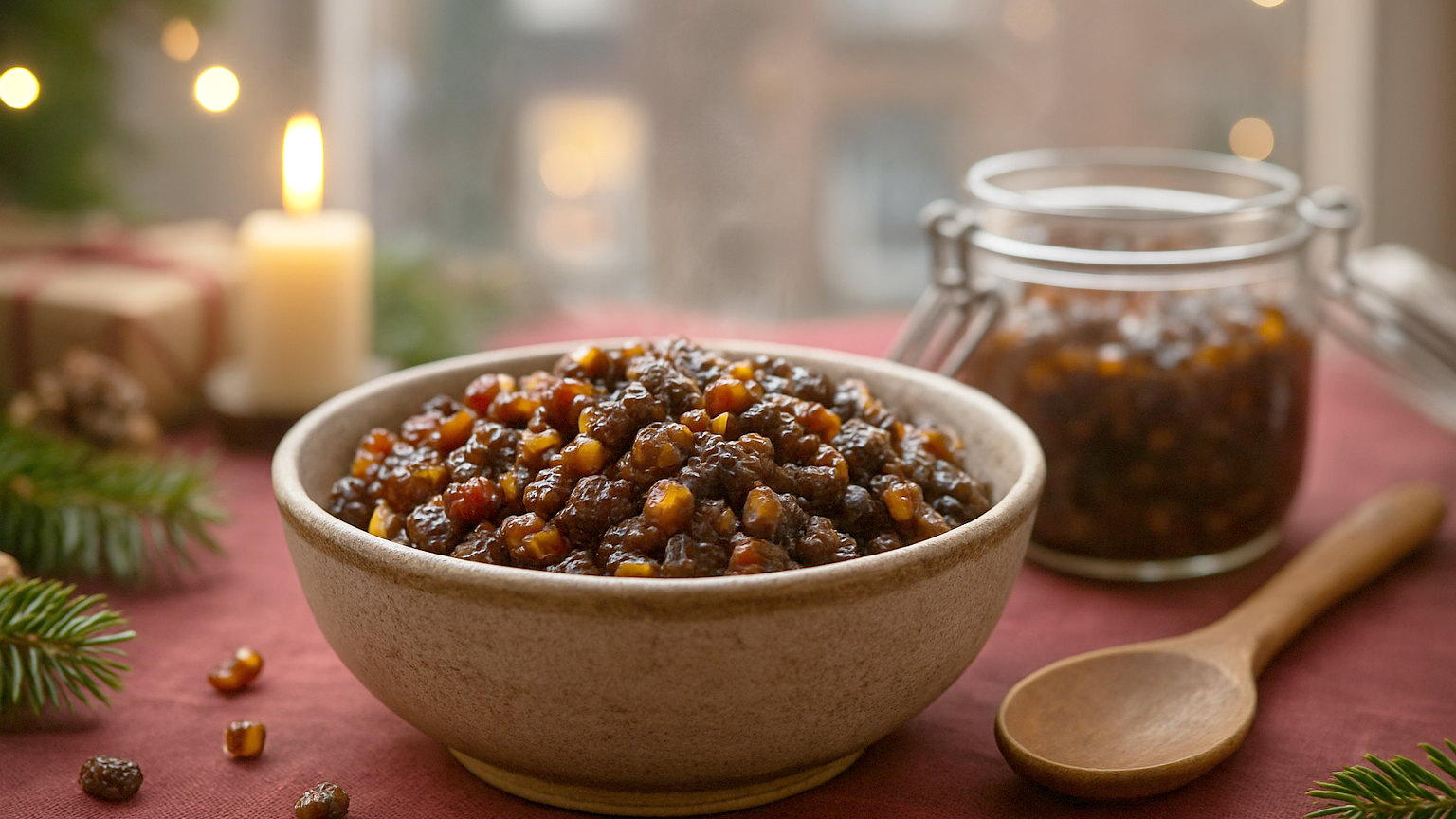
Homemade mincemeat is better than anything in a jar, costs less, and takes about twenty minutes of actual work. It also keeps for a year, which means it can be made in October and forgotten about entirely. The reason most people buy it is simply that they have never made it, and the process turns out to be closer to assembling a jar than to cooking.
Why is it called mincemeat?
Because it originally contained meat. Medieval mincemeat was minced beef or mutton combined with dried fruit, spices and suet, which preserved the meat through the winter and reflected a period when the line between sweet and savoury cooking was much less firm. The meat gradually disappeared over the eighteenth and nineteenth centuries, leaving the suet behind as the last trace of it.
What goes into it?
Dried fruit as the base: raisins, sultanas and currants, with candied peel. Grated apple, which supplies moisture and freshness. Suet, either beef or vegetarian. Sugar, usually dark muscovado or demerara. Warm spices, meaning mixed spice, cinnamon, nutmeg and cloves. Citrus zest and juice. And brandy, rum or whisky, which does most of the preserving. Chopped nuts and dried apricots or figs are common additions.
Do you need suet?
No, though it does a job. Suet coats the fruit and gives the traditional texture, and vegetarian suet works exactly as well as beef. Recipes without it substitute butter, which must be added melted and produces a slightly different consistency, or omit fat entirely for a fresher, looser mincemeat that keeps for less time and is best refrigerated. All three versions are legitimate.
Sterilise the jars properly and fill them while both jars and mincemeat are warm. A jar washed and dried but not sterilised is the usual reason a batch grows mould in February.
What is the easiest method?
The slow oven method removes the guesswork. Mix everything except the alcohol in a large ovenproof bowl, cover with foil, and put it in a very low oven at around 110C for two to three hours. The suet melts and coats every piece of fruit, which is what makes it keep. Let it cool, stirring occasionally, then stir in the brandy and pot it. The alcohol goes in cold so it does not evaporate.
How do you sterilise the jars?
Wash them in hot soapy water, rinse, and put them upright in an oven at around 140C for fifteen minutes. Boil the lids separately or run them through a hot dishwasher cycle. Fill the jars while they are still warm, seal immediately, and label with the date. Cold mincemeat into cold jars is fine if both are properly clean, but warm into warm gives a better seal.
How long does it keep?
A suet based mincemeat with a decent quantity of alcohol keeps for a year or more in a cool dark cupboard, and the flavour improves considerably over the first few months. Once opened, keep it in the fridge and use it within a few weeks. A version without suet or alcohol should be refrigerated from the start and eaten within a month.
What else can you do with it?
Far more than mince pies. Stirred through a crumble with apples. Baked into a bread and butter pudding. Rolled into a strudel or a swiss roll. Spooned over ice cream. Folded into a sponge batter for a steamed pudding. Used as the filling for a frangipane tart, which is the best use of it after the pies themselves. A jar opened in January does not have to be a problem.
Can you make it without alcohol?
Yes, using orange or apple juice and a little extra sugar, but it will not keep in the same way. Make it a fortnight before Christmas rather than in October, store it in the fridge, and use it within a month.
Strong cold tea is a useful addition in a version without alcohol, since it supplies some of the tannic depth that brandy would otherwise contribute.


