
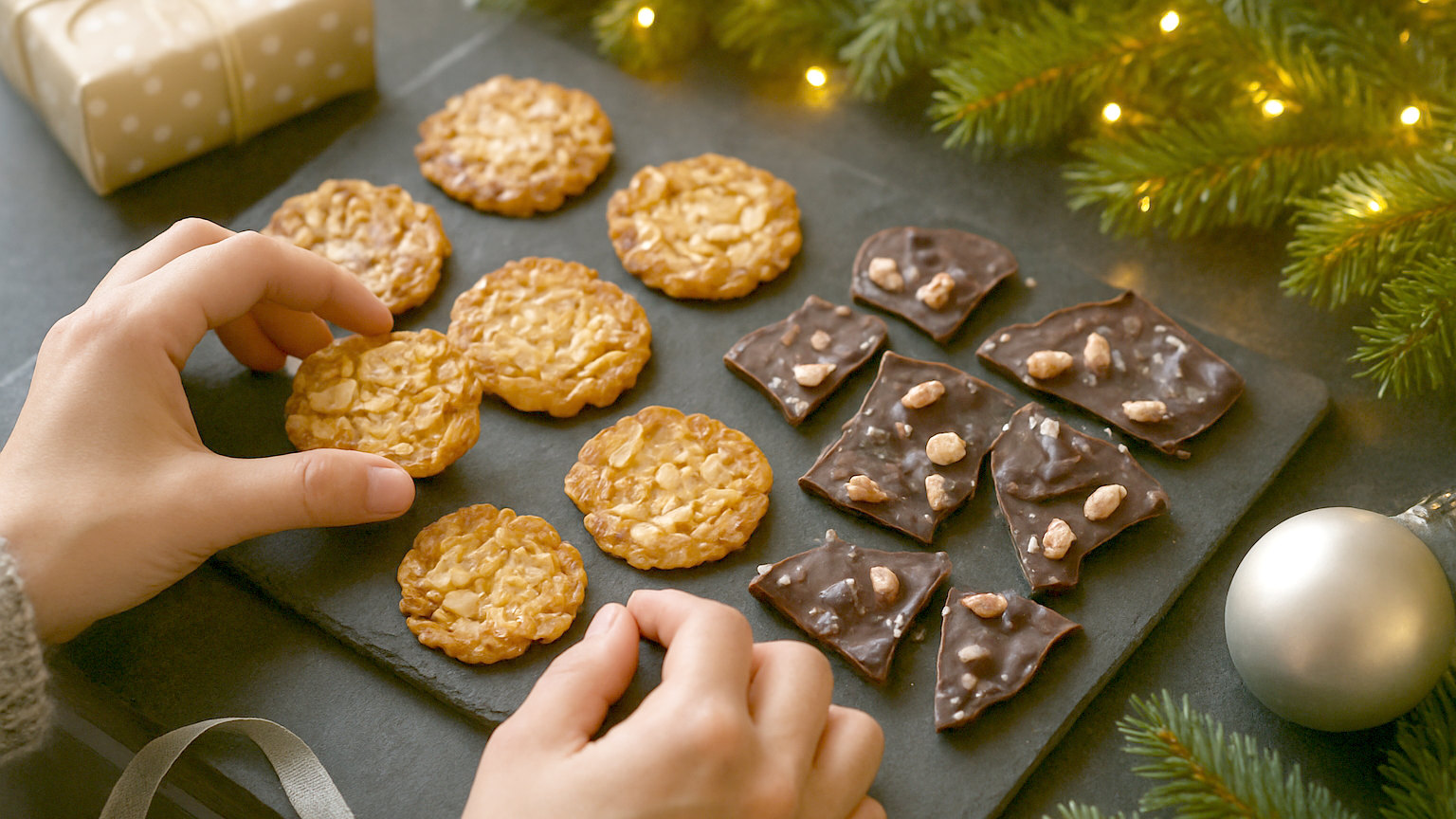
Florentines and chocolate bark are the two highest return items in Christmas baking. Both look considerably more difficult than they are, both make excellent presents, and neither requires any equipment beyond a pan and a tray. Bark in particular is a genuine no skill recipe that produces something people assume came from a shop.
What is a florentine?
A thin, chewy, caramelised biscuit of nuts and dried fruit bound with butter, sugar and cream, baked until it spreads and sets, then coated on the base with chocolate. There is very little flour in it, which is why it behaves more like a caramel than a biscuit. Almonds, glace cherries, candied peel and flaked almonds are traditional, but any nut and dried fruit combination works.
How do you control the spread?
Space them widely, at least eight centimetres apart, because they will double in size. Use small quantities, around a teaspoon each, since a large mound spreads into a puddle and merges with its neighbours. Bake on baking parchment or a silicone mat rather than a greased tray. If they spread unevenly, push the edges back into a circle with a knife or a cutter while they are still hot.
When do you take them off the tray?
After a few minutes of cooling, once they have firmed enough to lift but before they are cold and brittle. Straight from the oven they are liquid and will tear. Completely cold they weld to the parchment. The window is short and obvious once you have done it once, and a palette knife makes it considerably easier than a fish slice.
Chocolate bark needs no tempering at all if it is going to be kept in the fridge. Tempering matters for shelf stable chocolate at room temperature, and a present eaten within a fortnight does not need it.
How do you make chocolate bark?
Melt chocolate gently, spread it in a thin layer on parchment, scatter things over it while it is still wet, and let it set. That is the entire method. Nuts, dried fruit, crushed biscuits, freeze dried raspberries, crystallised ginger, sea salt, crushed candy canes and honeycomb all work. Break it into irregular pieces once set, which is where the name comes from.
How should you melt the chocolate?
In a bowl over a pan of barely simmering water, with the bowl not touching the water, or in a microwave in twenty second bursts stirring between each. The two things to avoid are overheating, which makes it grainy, and any water getting into it, which makes it seize into a solid mass. A single drop is enough, so dry the bowl and the spoon thoroughly.
How long do they keep?
Florentines for around a week in an airtight tin, though they soften in a humid kitchen and are best made within a few days of being given. Bark keeps for two to three weeks in the fridge or a cool cupboard. Neither freezes especially well, since both suffer from condensation on defrosting, so they are December projects rather than November ones.
How do you pack them as presents?
Cellophane bags with a ribbon, small tins lined with greaseproof paper, or a jar. Layer florentines between sheets of parchment so they do not stick to each other. Label them with the contents, particularly the nuts, which matters for anybody with an allergy and is simply good manners. Both look expensive for what they cost, which is much of the appeal.
Which chocolate should you buy?
Something you would eat on its own, at around 50 to 70 percent for dark, since the chocolate is most of what you are tasting. Cheap cooking chocolate with vegetable fat in it sets badly and tastes waxy.
Chocolate chips are formulated to hold their shape in an oven and melt reluctantly, so a chopped bar is the better choice for anything that has to become liquid.


