
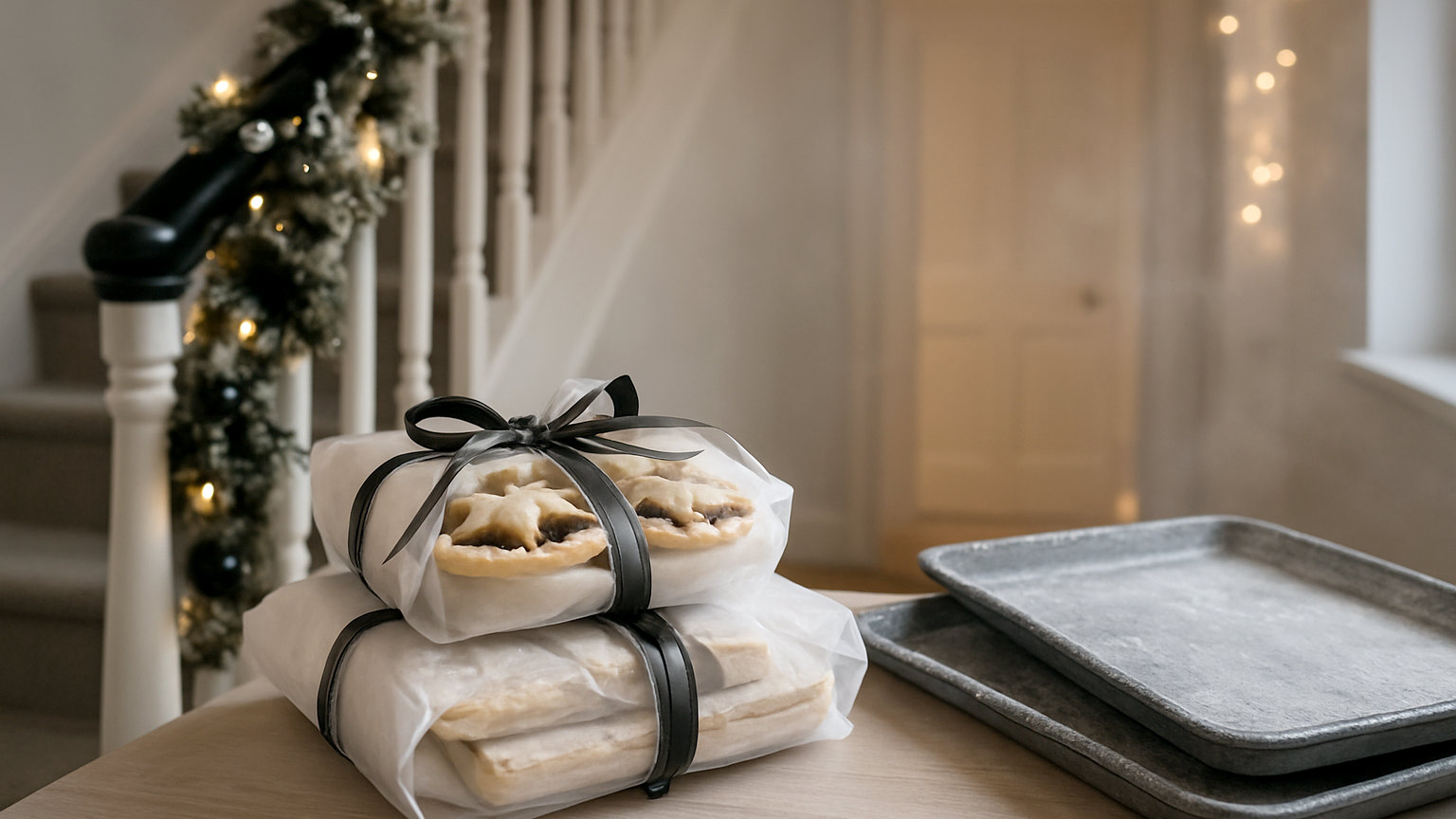
The freezer is the most underused piece of Christmas equipment in most houses. Nearly everything baked in December freezes, and a great deal of it freezes better raw than cooked, which means the work can be done in October and the results can be produced fresh from the oven on the day somebody arrives. The only genuine requirement is labelling, because an unidentified parcel in January gets thrown away.
What freezes better raw than baked?
Mince pies, assembled in the tin and frozen solid before being bagged. Sausage rolls, made and cut but not egg washed. Pastry, either as a block or already rolled and lined into a tin. Biscuit dough, rolled into a log and sliced frozen. Bread and enriched doughs after the first prove. Scones, cut and frozen raw. In each case baking from frozen produces something indistinguishable from fresh, which baking and then freezing does not.
What freezes well already baked?
Cakes, undecorated and well wrapped. Yule log sponge, rolled but unfilled. Brownies and traybakes. Bread, sliced before freezing so you can take what you need. Pancakes and waffles. Anything that will be reheated rather than eaten cold does best. Iced or filled items generally do not freeze well, since cream separates and icing sweats as it defrosts.
How do you bake from frozen?
Straight from the freezer, at the normal temperature, with roughly five to ten extra minutes for small items and up to twenty for larger ones. Do not defrost pastry items first, because the whole advantage of freezing raw pastry is that the butter goes into the oven cold, which is what produces the lift. Egg wash frozen items just before they go in rather than before freezing.
Open freeze on a tray first, then bag. Items bagged while soft weld into a single block, and a block of forty mince pies is not useful.
How long does everything keep?
Raw pastry items around three months. Baked cakes and breads around three months. Biscuit dough up to six. Fruit cake, which barely needs freezing, indefinitely in a tin. Beyond those windows nothing becomes unsafe, but quality falls off and freezer burn sets in, which is why wrapping matters as much as timing. Double wrap anything staying in for longer than a month.
How should it be wrapped?
Airtight and in portions you will actually use. Wrap cakes in clingfilm then foil. Bag small items in quantities of six or twelve rather than in one large bag that has to be opened repeatedly. Squeeze the air out. Anything with a strong smell should be double wrapped, since the freezer transfers aromas readily and mince pies tasting faintly of onion is a real outcome.
What does not freeze?
Anything with a high water content that relies on texture: meringue, which goes chewy, and custards, which split. Cream cheese frostings. Whole eggs in the shell, obviously. Fresh cream on its own separates, though it is fine whipped into a mousse or a filling. Anything already defrosted once should not go back in, which matters for shop bought pastry.
When should you do the baking?
October and November, on ordinary weekends, which is the entire point. Doing one session of pastry, one of biscuit dough and one of cake means that by the start of December the freezer contains most of what December needs. Write a list of what is in there and stick it to the door, because the most common failure is not running out of freezer space but forgetting what is in it.
What should you defrost slowly?
Anything baked, which should come back to room temperature in its wrapping rather than being unwrapped first, since unwrapping lets condensation form on the surface and makes it wet.
Cakes in particular want several hours at room temperature still wrapped. Rushing a frozen cake in a warm oven produces a dry edge and a cold middle, and there is no way to correct it afterwards.


