
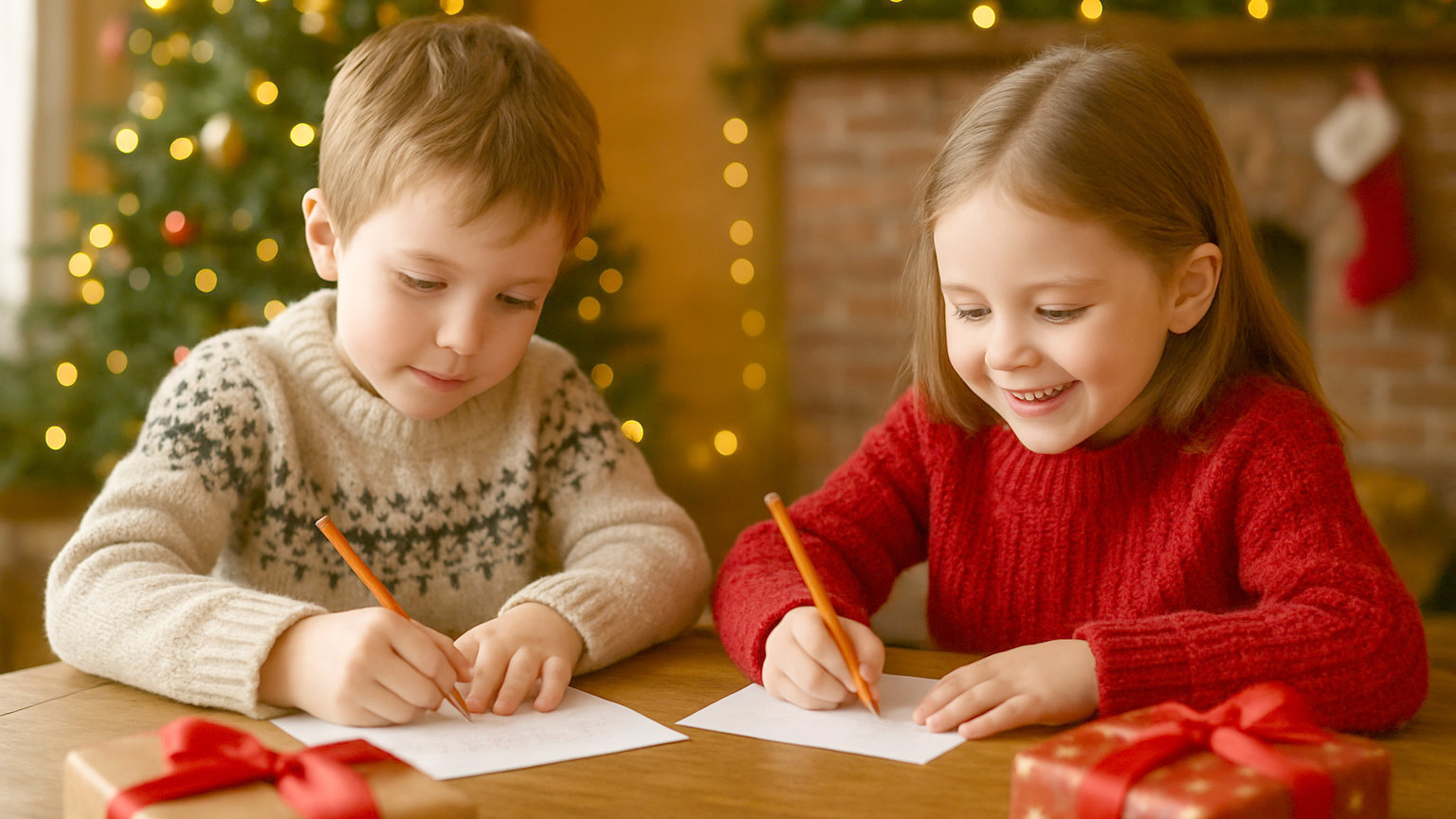
The best games on Christmas Day are the ones that can be played without anybody standing up, because after a large meal nobody is going to. Games needing only a pen and some paper have the additional advantage that they can start in thirty seconds, they work at a table, and nothing has to be found in a cupboard first.
How does consequences work?
Everybody writes the first line of a story, folds the paper to hide it, and passes it on. The next person writes the second line without seeing the first, and so on through an agreed sequence of prompts. At the end each sheet is unfolded and read aloud. It suits any age that can write, it takes ten minutes, and the results are reliably funnier than anybody expects.
What is the drawing version?
The same mechanic with pictures. One person writes a phrase, the next draws it, the next describes the drawing without seeing the phrase, and so on down the page. The gap between the original sentence and the final one is where the game lives. It works better than the written version with children, since drawing is less of a barrier than spelling.
How do you play categories?
Agree five or six categories, such as animals, countries, foods and films. Pick a letter at random. Everybody has two minutes to write one answer in each category beginning with that letter. Score a point for each valid answer, and two if nobody else wrote the same one. It rewards obscurity rather than speed, which levels the field between children and adults considerably.
These games start in thirty seconds, which is why they work. Anything requiring a box to be found and rules to be read has already lost half the room.
What about a guessing game on paper?
Everybody writes down something on a slip, folds it and puts it in a bowl. Depending on the version, that might be a famous person, an unusual fact about themselves, or a wish for the year. The slips are drawn and read out and the room guesses who wrote it. The version using facts about the people present is far and away the best at a family gathering.
Which game suits the widest age range?
The drawing version of consequences, which works from about five upwards and does not disadvantage anybody who is not a confident speller. Categories works from about seven. The guessing game works at any age if the prompts are chosen sensibly. Pairing a young child with an adult solves almost all of the remaining age gap problems.
How long should a game run?
Three or four rounds and then stop, which is usually about twenty minutes. All of these are short form games that lose their edge with repetition, and stopping while people still want another round is what makes them fun to bring out again the following day. A game of consequences played for an hour becomes an endurance test.
What do you need to have ready?
Paper and enough pens for everybody, which is the one thing households run short of, and something to write on if the table has been cleared for food. A pad of plain paper and a pot of pens kept with the decorations means the games can start the moment somebody suggests one rather than after a search of three drawers.
What suits the quiet days afterwards?
All of them, and they are frequently better on the twenty-seventh than on Christmas Day itself, when the room is full and everybody has eaten too much. The week between Christmas and New Year is when these games do their best work.
Keeping the pad and pens out through the whole week means somebody will start a game without it having to be organised, which is how the best of them begin.
And keep the paper, since the results of a good round of consequences are worth reading again the following year and take up no space at all in the decorations box.


