
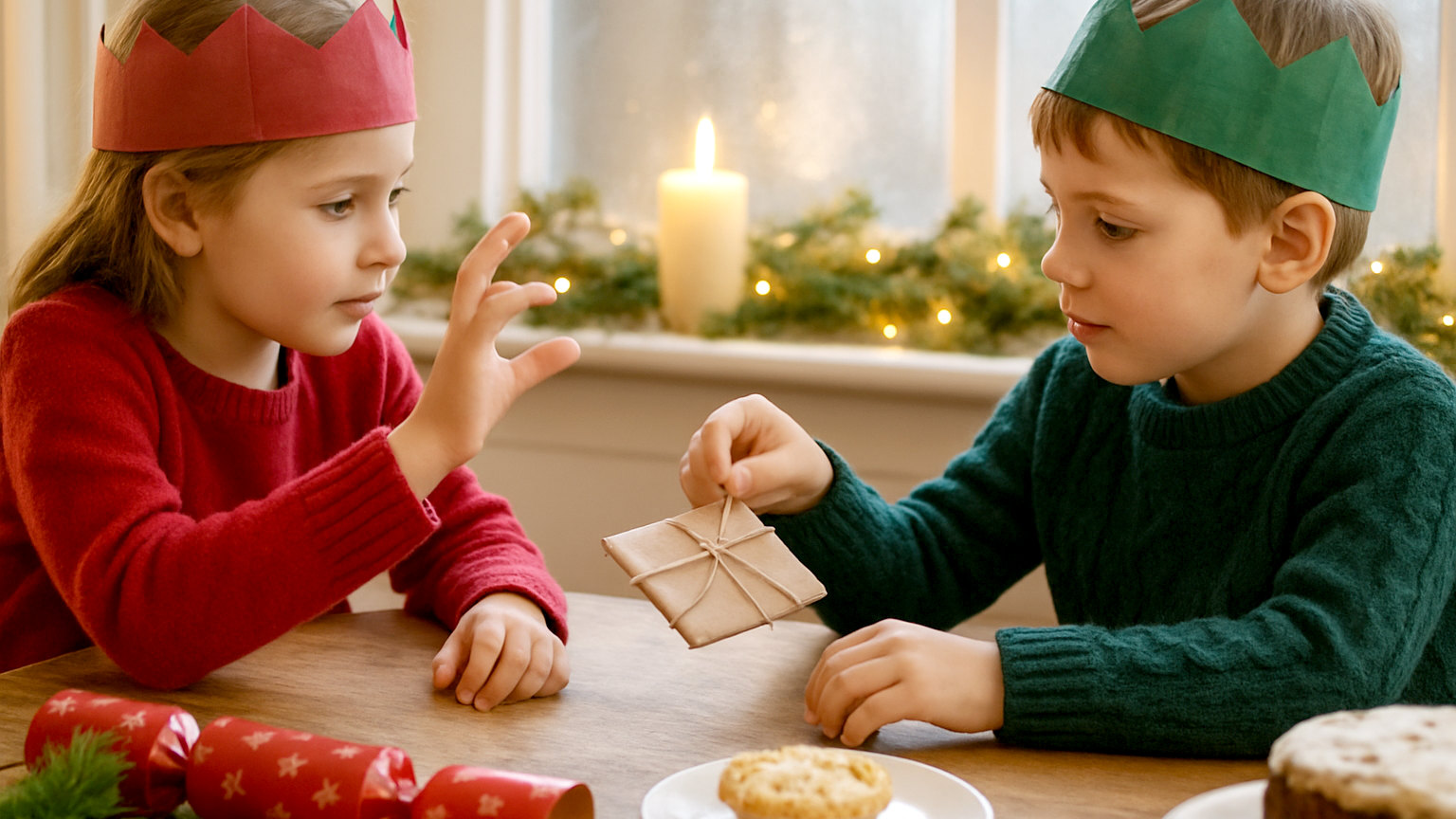
Everybody knows charades, and no two families play it the same way, which is why the first ten minutes of any game is an argument about the signals. Agreeing them at the start, out loud, before anybody has a stake in the outcome, is what turns it from a dispute into a game. That is genuinely the whole trick.
Which signals are worth agreeing?
The category first: film, book, song, television programme, play. Then the number of words, shown on fingers, and which word is being tackled. Then syllables, shown as fingers laid on the forearm. Then the small ones: sounds like, indicated by cupping an ear, and the whole thing, indicated by drawing a circle in the air. Ten seconds each and the argument is over.
How do you pick the titles?
Write them in advance rather than letting people think of them on the spot, which produces either something impossible or something they have just seen. Pitch them at the youngest player in the room, since a title nobody can guess is dead air. Mix films, books, songs and programmes so that different people in the room have an advantage on different rounds.
How should teams be picked?
Deliberately mixed rather than by who is sitting where, since that produces adults against children. Two teams of four or five, each with a range of ages, works best. Somebody keeping score who is not playing removes the disputes, and if that is not possible, one person on each team keeping the same tally will do.
Agree the signals before the first turn. Every family plays it differently and the argument only starts once somebody has something to lose.
What time limit should there be?
Two or three minutes, timed by somebody with a phone, and stick to it. A turn without a limit runs until the person gives up, which is embarrassing for them and tedious for everybody else. A limit also creates the urgency that makes the game funny, since almost all of the comedy comes from somebody running out of time.
How do you include young children?
Pair them with an adult for their turn, and write a few titles specifically for them that they will recognise instantly. A five year old acting out something they love, badly, is usually the highlight of the game. Letting them guess out of turn without penalty also keeps them in it, since the waiting is what loses them.
What variations are worth trying?
The version where the same set of titles is played three times in a row, first with speech, then with mime, then with a single word, which gets funnier each round because everybody already knows the titles. A drawing version on a large pad. And a version restricted to Christmas titles, which is harder than it sounds and runs out after about twenty.
When should you stop?
While people still want another round, which is usually after four or five turns each. Charades has a natural length and pushing past it turns a good twenty minutes into a long forty. Declare a winner, make something of it, and move on to whatever is next before the room decides it is over on its own.
How do you write good titles?
Aim for things everybody in the room has heard of rather than things that are clever, since a title only two people know produces silence rather than laughter. Well known films, nursery rhymes, songs and books all work.
Writing forty in advance and keeping them in an envelope with the decorations means the game can start immediately in future years, which is worth the twenty minutes it takes.
What if somebody refuses to take part?
Let them, and give them a job instead. Keeping score, running the timer or judging disputes are all real roles, and somebody who does not want to stand up in front of the room will frequently be perfectly happy doing one of them.
Pressing an unwilling person into a turn is the fastest way to end a game that everybody else was enjoying.


