
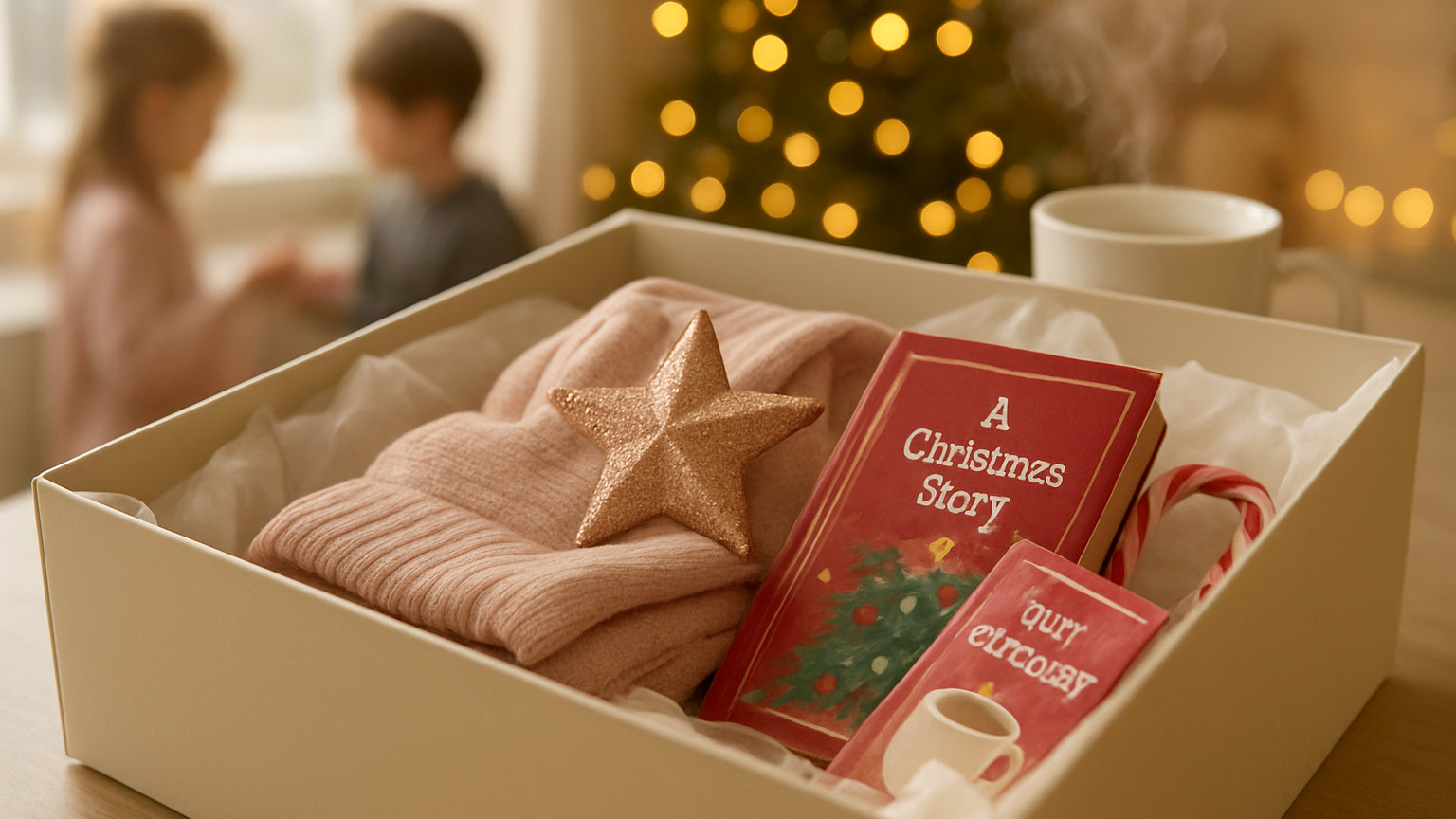
The Christmas Eve box is a recent tradition, largely from the last fifteen years, and it works when it does one specific job: setting up the evening of the twenty-fourth so it has a shape. It works badly when it becomes a second round of presents competing with the morning, which is what happens when the budget creeps and the contents become substantial.
What belongs in one?
Things that are used that evening. New pyjamas, which is the item most households include. A film to watch. Hot chocolate and something to eat with it. A book to read at bedtime. A small activity. The plate and glass for the mince pie and the drink by the fireplace, and a carrot for the reindeer. Everything in that list is consumed before bedtime, which is the test.
What should you spend?
Very little, and considerably less than most of what appears online. The pyjamas are the main cost and would usually be bought anyway. Everything else can total under ten pounds. A box that costs thirty or forty pounds per child has become a present rather than a tradition, and it makes Christmas morning feel like the second event rather than the first.
When should it be handed over?
Early evening rather than in the morning, so it leads directly into the film, the bath and bedtime. Handing it over at breakfast means the contents are finished by lunchtime and the evening has nothing left in it. The point of the box is to give the last few hours a structure, and the timing is what makes that work.
Everything in the box should be used before bedtime. If an item survives to Christmas morning, it belonged under the tree instead.
Does it need to be a special box?
No, and a reusable one is better than a printed cardboard box that goes in the bin. A wooden crate, a fabric bag, a basket or a decorated shoebox all work and can be used every year, which is both cheaper and considerably more likely to become a tradition rather than a purchase. Children attach to the same box appearing each year.
What works for older children?
The same structure with different contents. Pyjamas still work at fourteen. A film everybody watches together, snacks, a game, a book, a small item they will use. Teenagers are frequently more attached to the traditions of the evening than they let on, and the box gives the household a reason to be in the same room, which is most of the value.
What should you leave out?
Toys, which are Christmas morning presents in a different box. Anything expensive. Anything requiring assembly or batteries. Anything that will start an argument between siblings on an evening when everybody is already overtired. And anything that produces a great deal of mess an hour before bedtime.
How does it fit into the evening?
As the first item in a running order. Box, then film, then the food and drink left out, then bath, then pyjamas, then a story, then bed. Having that sequence decided in advance is what gets children to sleep at a civilised hour, which is the practical benefit of the whole tradition and the reason it has spread so quickly.
What if you have several children?
One box between them works better than one each, particularly if the contents are a film, a snack and something to do, all of which are shared anyway. It halves the cost and removes the comparison entirely.
Where each child has their own, keep the contents equivalent rather than identical, and open them at the same time. A box opened separately becomes a small present rather than the start of a shared evening.
Whatever goes in it, the box works best when it is the same every year with small variations, since the repetition is what turns a nice idea into a tradition children look forward to.


