
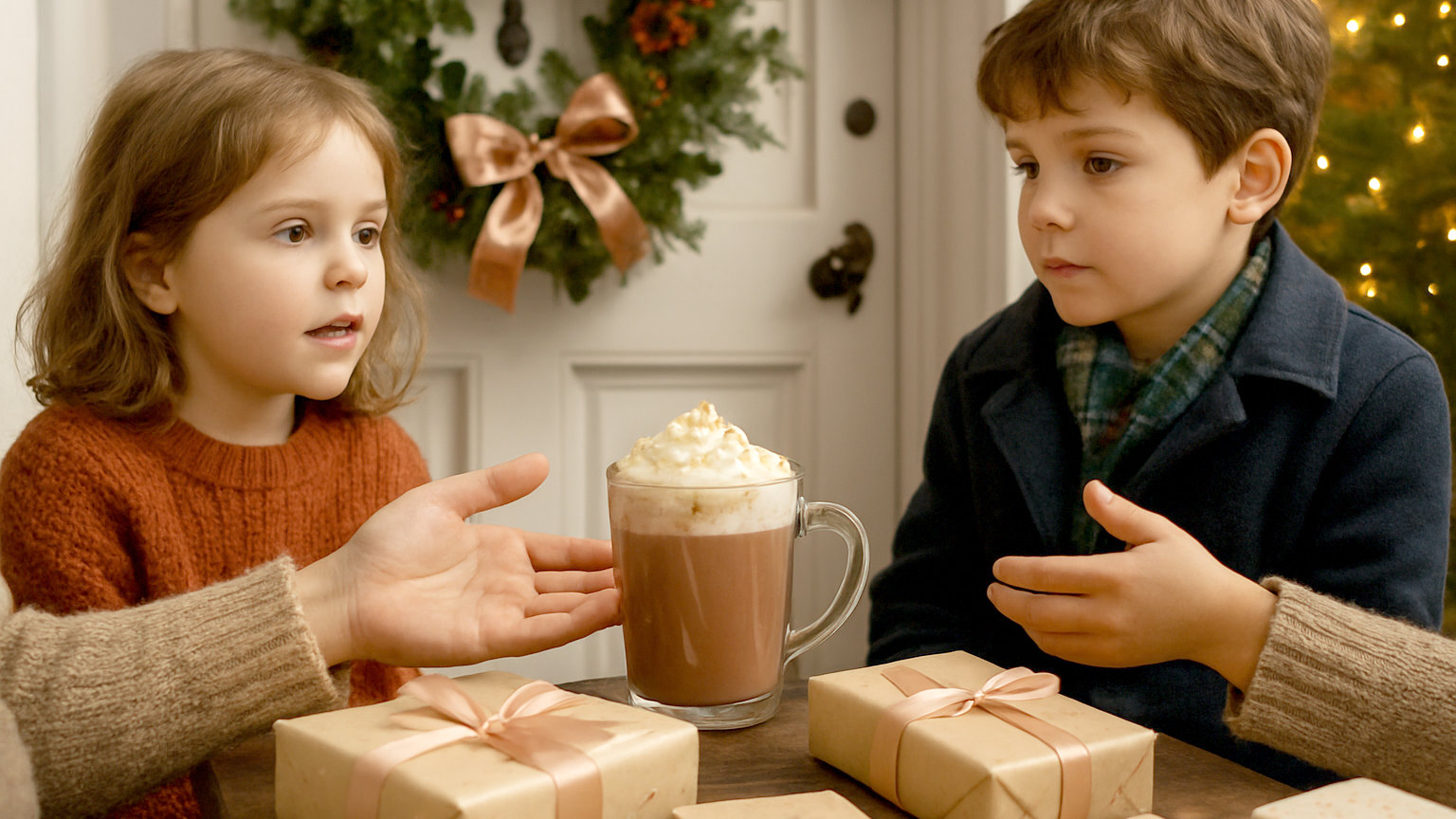
The questions usually start somewhere around six or seven, sometimes earlier if there is an older sibling or a confident child in the class, and they rarely arrive as a straightforward request for information. A child asking how the sleigh gets round the world in one night is often testing an idea rather than demanding an answer, and responding to the question underneath it matters more than responding to the words.
What are they actually asking?
Usually one of three things. Sometimes it is genuine curiosity about the mechanics, in which case an inventive answer is exactly what they want and the conversation ends happily. Sometimes it is a test to see whether you will tell them the truth, which is a different thing entirely. And sometimes they already know, have worked it out, and are looking for confirmation that it is safe to say so out loud.
How do you tell which it is?
Ask them what they think. Turning the question back gently, without any weight in it, almost always reveals which of the three you are dealing with, because a child who wants the magic will offer an explanation and a child who has worked it out will say so. It also means you are following their lead rather than making a decision on their behalf about something they may not be ready for.
Ask what they think before you answer. It is the single most useful response, and it lets the child set the pace rather than you.
What do you say when they know?
Most families find that the version that works is not a revelation but an invitation. Explaining that Father Christmas is something the grown ups do for the children, and that now they know, they can be one of the people who does it, turns the end of one thing into the beginning of another. Children who are given a role in keeping it going for a younger sibling take it extremely seriously and are rarely disappointed.
How do you handle siblings?
Make it explicit rather than assuming. An older child who has worked it out needs to be told directly that the younger ones have not, and to be asked to keep it, which most will do with some pride. What causes problems is an older child finding out accidentally and announcing it at the table, which is entirely avoidable with one conversation in private.
What if another child tells them?
It happens in every school year and there is no way to prevent it. If they come home with it, the honest approach is to ask what they think again rather than either denying it or confirming it on the spot. Some children hear it, dismiss it and carry on believing for another two years, which is entirely normal and does not need to be corrected.
Does it matter if they find out early?
Very little, on the evidence of most people own childhoods. Children who work it out at five generally enjoy Christmas exactly as much as children who believe until ten, because the parts they actually love are the tree, the anticipation, the stocking and the day itself rather than the identity of who filled it. The anxiety about this sits almost entirely with the adults.
What about households that never do it?
Plenty of families do not, for reasons of belief, of honesty or simply of preference, and their children have entirely good Christmases. Where it becomes worth a conversation is at school, since a child who has always been told the truth needs to know that other children have not, and that saying so in the playground will upset them. That is a lesson about kindness rather than about Christmas.
What should you say to a child who is upset?
Take it seriously rather than brushing past it, since a child who is genuinely sad has lost something real to them. Acknowledging that it is a sad thing to find out, and that you felt the same, is more use than a reassurance that nothing has changed.
What helps most is giving them something to replace it with: a role in doing it for somebody else, a job on Christmas Eve, or simply the knowledge that they now know something the younger ones do not.


