
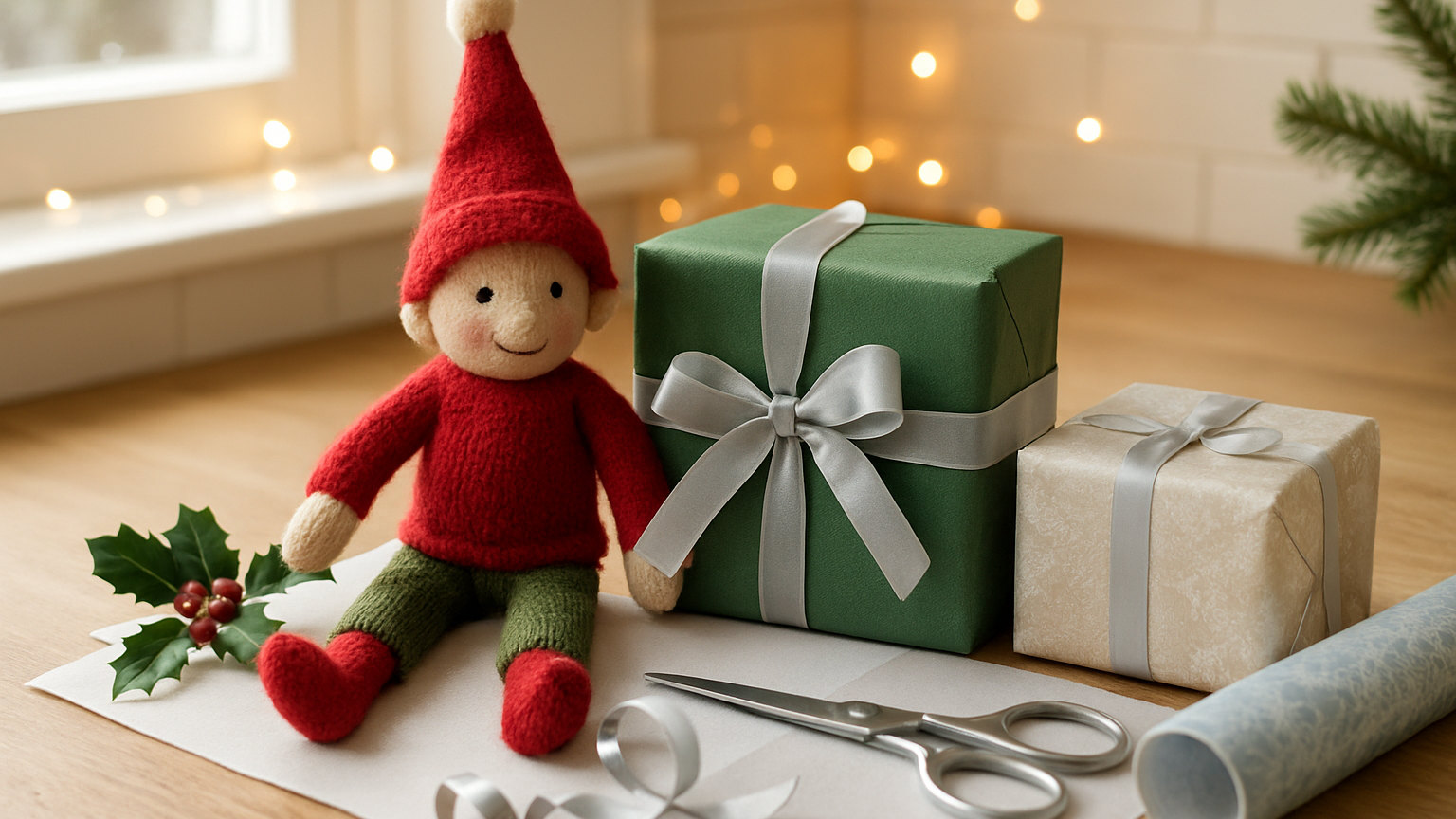
The elf tradition has a well documented failure mode: it starts as a small daily surprise, escalates because somebody saw an elaborate one online, and by the fifteenth of December it is a nightly chore performed at eleven at night by an exhausted adult. Keeping it simple from the start is not laziness, it is the only way the tradition survives to the twenty-fourth.
How do you keep it simple?
Set the expectation on day one with something modest. If the elf arrives having built a full scene, that is now the standard. If it arrives sitting on a shelf holding a note, that is the standard instead, and children are entirely happy with it. The elaborate versions online are made by people who enjoy making them, which is a hobby rather than a requirement.
What takes two minutes?
Sitting in a mug. In the fruit bowl. Reading a book. In a shoe. On the tap. Hanging from a light pull. In the biscuit tin. Wearing a sock as a hat. On top of the Christmas tree. In the fridge. Holding a chocolate coin. Playing cards with a teddy. In a plant pot. Wrapped in loo roll. On the bannister. In the toy box. Each of these is one action.
What about a note instead?
A small note from the elf is the lowest effort and frequently the best received, since it gives the elf a voice. It can encourage something you wanted encouraged anyway, mention something that happened yesterday, or set a small challenge for the day. Ten seconds to write and it does more than a constructed scene.
Set the bar low on the first night. Whatever the elf does on the first of December is what a child will expect for the rest of the month.
What do you do when you forget?
Which will happen. The standard explanations are that the elf was tired, got stuck, or stayed at the North Pole overnight to report in. A note left the following morning explaining the absence works perfectly. Children are considerably more relaxed about this than the adults responsible, and a forgotten elf is not the crisis it feels like at seven in the morning.
Should the elf make mess?
Only if you are cleaning it up. Flour, glitter, toothpaste and toilet roll all photograph well and all have to be dealt with before breakfast by somebody. The mischievous versions also sit slightly oddly alongside asking children to behave well, which some households find awkward and others do not mind at all. Both positions are entirely reasonable.
Are there alternatives to the elf?
Several households use a kindness version, where the elf leaves a small good deed to do each day rather than causing mischief. Others use a different character entirely, or a reindeer, or a toy the child already has. The tradition is a daily surprise and a small piece of magic; the particular figure and the rules around it are entirely yours to set.
When does it stop?
When the children stop believing, which usually happens gradually and often with an older sibling quietly keeping the secret for a younger one. Many families continue the elf long after everybody knows, as a joke that has become a tradition in its own right. There is no need to end it formally, and no need to have a conversation about it unless a child starts one.
Does it have to run every day?
No, and several households run it only on weekdays, or only for the twelve days before Christmas, which halves the work without a child noticing anything is missing. The elf simply arrives later in the month.
Setting that out at the start, as part of how your elf works, avoids the need to explain the gaps. Every household elf has its own rules and children accept whatever they are told on day one.
The one rule worth keeping whatever version you run is that the elf should never be used as a threat, since a figure that reports bad behaviour is a considerably less enjoyable presence in a house than one that simply turns up somewhere odd each morning.


