
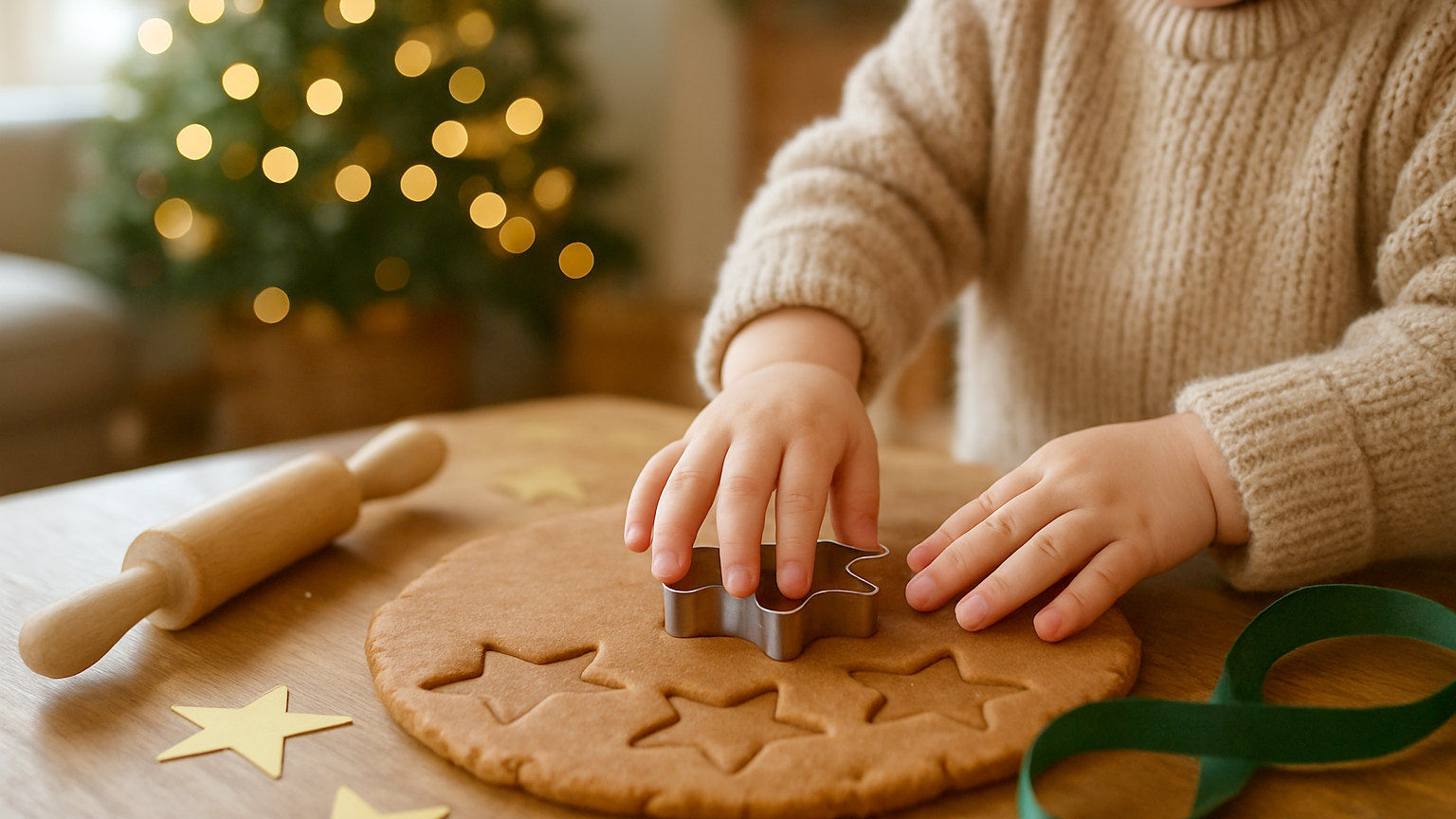
A toddler does not need a busy December and will be visibly worse for one. At two and three the interesting things are the ordinary ones, the attention span is measured in minutes rather than hours, and the main risk to the whole month is overtiredness rather than boredom. Planning less, and planning it around naps, is the single most useful thing to know about this age.
How long does anything actually last?
Between five and fifteen minutes for most activities, which is far shorter than the activity was designed for and is entirely normal. This is why elaborate craft projects fail at this age and why a bowl of water with some spoons in it succeeds. Planning three short things across a morning works considerably better than one long one, and expecting any of them to fill an hour is optimistic.
What genuinely works at this age?
Anything sensory. A tray of dried pasta or oats with scoops and cups. Sticking shapes onto paper. Pressing cutters into salt dough or playdough. Painting with a big brush. Threading large beads. Posting things into a box. Wrapping objects in paper, which is the single most reliable Christmas activity for a two year old and can be repeated endlessly with the same three items.
What about the tree?
Let them help, and accept that every decoration will end up on the same branch at knee height. Giving a toddler a handful of shatterproof decorations and their own small section of the tree keeps them occupied and gives them a stake in it. Redistributing them quietly later is entirely acceptable and nobody has ever noticed. Secure the tree itself, since a two year old will pull on it.
Plan around naps rather than around the clock. Almost every difficult December afternoon with a toddler is a tiredness problem wearing an activity costume.
What should you skip entirely?
Long queues of any kind, which is most grottos on a Saturday. Anything with a fixed start time in the middle of a nap. Loud crowded events. Any craft requiring precision or patience. And any activity where the adult has an image of the finished result in mind, since the gap between that image and what a two year old produces is where the frustration comes from.
How do you handle a grotto visit?
Book the first slot of the day, keep it short, and be entirely relaxed about the possibility that they will refuse to go near him. A substantial proportion of two and three year olds are frightened by a stranger in a red suit in a dark room, which is a reasonable response rather than a failure. Do not push it, and do not spend money on a photograph in advance.
What works for the countdown?
Something visual and physical rather than a calendar with doors, since the concept of twenty-four days means nothing at two. A paper chain with a link removed each day, or a set of pictures moved along a string, gives them something concrete to do. Keeping the countdown short, starting a week or ten days out, matches how far ahead a toddler can actually anticipate.
What matters most on the day?
Pacing. Opening presents slowly with gaps between them, holding several back for the afternoon, and protecting the nap even if it means missing part of the day. A toddler who has opened fifteen presents in twenty minutes is not enjoying themselves by the end of it, and the most common Christmas Day problem at this age is a pile that was too big rather than too small.
What about visits and gatherings?
Keep them short and go early rather than staying late, since a toddler at the end of a four hour gathering in an unfamiliar house is nobody having a good time. Leaving while it is still going well is the whole skill.
Bringing a small bag of familiar things, and knowing where the quiet room is, makes the difference between a visit that works and one that ends with everybody in the car earlier than planned.


