
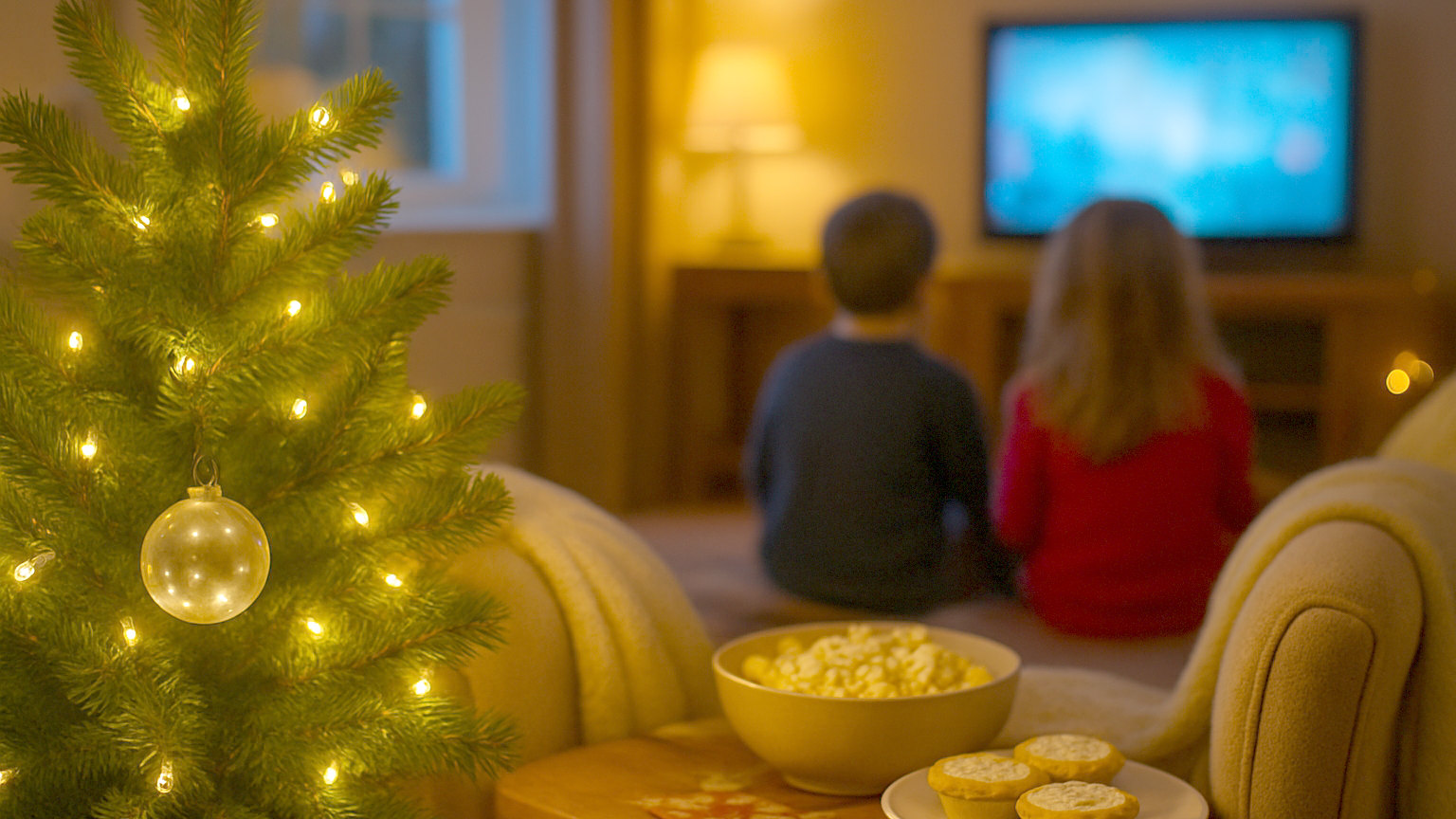
A tradition is not something inherited, it is something done the same way three years running. That is a considerably lower bar than most people assume, and it means any household can start one this December. A film is among the easiest to establish, because it needs no preparation, costs nothing after the first year and takes exactly one evening.
How do you choose the film?
By what your household actually enjoys rather than by what is supposed to be a classic, since a tradition built on obligation collapses by the second year. It also does not have to be a great film. A tradition attaches to the repetition rather than the quality, and plenty of families watch something objectively mediocre every December with real affection.
Which evening should it be?
The same one every year, which is the part that does the work. Christmas Eve is the usual choice and has the advantage of being a fixed date rather than a day of the week. The evening the decorations go up is another good anchor. What matters is that it is predictable, so that it becomes something to look forward to rather than something to organise.
Why is smaller more durable?
Because a tradition that requires everybody to be present, for three hours, with food prepared in advance, will fail the first year somebody is working late. One film, on one evening, with whoever is in the house, survives almost anything. The traditions that last for decades are the ones that ask very little.
Three years is a tradition. Anything done the same way three Decembers running is established, and after that it maintains itself.
How do you get it going?
Announce it as a tradition the first year rather than waiting to see whether it becomes one. Saying that this is now what the household does on Christmas Eve is enough to make it true, particularly for children, who accept a stated tradition immediately. Do the same thing the following year without asking whether anybody wants to.
What should the surrounding ritual be?
Small and fixed. The same food, the lights off, the tree on, everybody in the same seats. The ritual matters as much as the film, and it is what a child remembers. Adding one distinctive element, whether that is a particular snack or the fact that the youngest presses play, makes it specific to your household rather than generic.
How does it survive children growing up?
Better than most traditions, because it is short and requires nothing of anybody. Teenagers who resist most family activity will generally sit through a film they have watched every year since they were four, and several households find that the one who complained at fifteen is the one asking whether it is still happening at twenty-five.
What if it stops working?
Change the film and keep the evening, which is the flexible part. The tradition is the fixed time and the fixed ritual rather than the specific title, and swapping the film after a decade is entirely legitimate. What is worth protecting is the slot itself, since once an evening loses its purpose it fills up with something else.
What else works as an annual tradition?
The same walk, the same meal on Christmas Eve, the same order of opening presents, the same music while cooking. All of these work on exactly the same principle and cost nothing beyond deciding to do them again.
A household that establishes three or four small fixed things has more of a Christmas identity than one that spends a great deal and does something different every year.
How do you record it?
A photograph each year in the same place, or a line in a notebook kept with the decorations. It takes seconds and after a decade it is the record of the tradition rather than the tradition itself that becomes the valuable thing.
Noting which film was watched, and who was there, also settles the inevitable disagreement about when a particular year happened.


