
A film afternoon that works is planned rather than proposed. The version that fails begins with somebody suggesting a film at two o clock, twenty minutes of negotiation about which one, and half the room drifting off before the opening titles. Deciding in advance removes all of that and takes about five minutes.
How do you build a running order?
Shortest and youngest first, longest and oldest last, so that the audience thins out naturally as the afternoon goes on rather than everybody being asked to sit through something unsuitable. A twenty minute short at two, a family film at half past two, and something for the adults at five is a workable shape for a mixed household.
What about the age spread?
Accept that no single film suits a four year old and a fifteen year old, and stop trying to find one. Two shorter films in sequence works better than one compromise, and the older children can do something else during the first. If there are two rooms, running two films is entirely reasonable and nobody has ever objected to it.
How long should the whole thing be?
Shorter than you think. Two films is a full afternoon once you allow for the gap in the middle, and three is more than most households manage without somebody losing interest. Building in a break between films, with something to eat and a change of room, resets everybody and is what makes a second film possible at all.
Decide the films the night before, not on the day. The twenty minutes of negotiation is what kills a film afternoon, and it happens every time the decision is left open.
What should the food be?
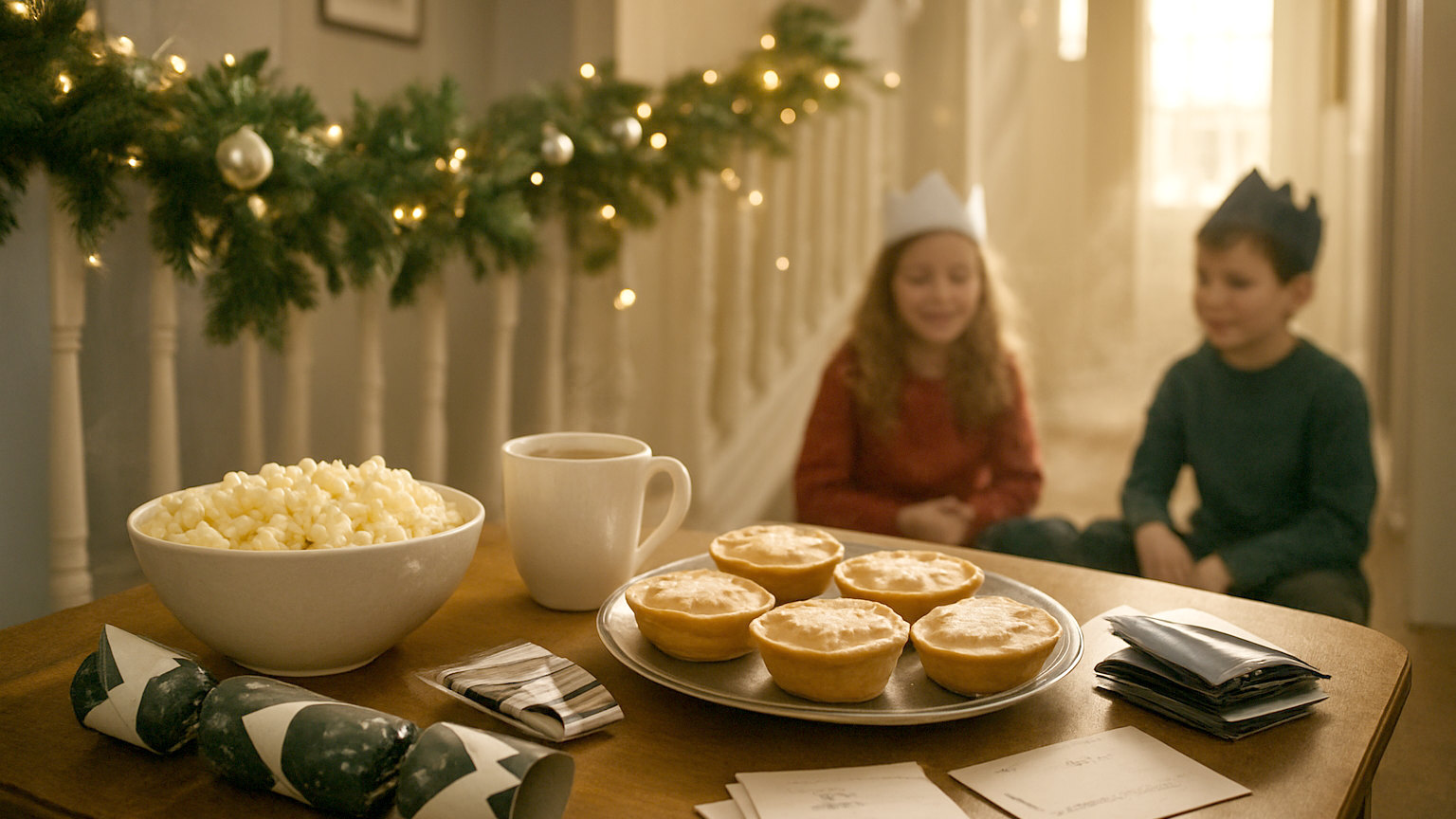
Something that can be eaten in the dark without cutlery and does not need attention. Popcorn, obviously. A bowl of something to share. Hot chocolate for a cold afternoon. Anything requiring a plate and a knife will end up on the floor. Set it out before starting rather than pausing halfway through, which breaks the spell and rarely recovers.
How do you set the room up?
Curtains closed, tree lights on, main lights off, and enough seating that nobody is on the floor by the radiator. Blankets and cushions matter more than the screen. It takes five minutes and it is the difference between a film afternoon and simply having the television on, which is a distinction children notice immediately.
What do you do when attention goes?
Let it. A film afternoon where the youngest wanders off after forty minutes to play with something is not a failure, and dragging them back turns a pleasant afternoon into a negotiation. Keeping something quiet available in the same room, such as colouring or a puzzle, means they can stay in the room without watching, which is usually what they want.
When is the best day for it?
The twenty-third or the afternoon of Christmas Eve, when everything is done and there is a gap to fill, or Boxing Day, when nobody wants to move. Christmas Day itself is usually too full. A wet afternoon in the week between term ending and Christmas is the other natural slot, and that one benefits most from having been planned in advance.
What should you do about interruptions?
Decide in advance whether the afternoon is a pause and resume arrangement or a proper sitting, and say so. A film stopped four times for drinks, doorbells and questions never regains its momentum, and the ending lands flat.
Getting the food, the drinks and the bathroom trips out of the way before the titles is a two minute job that saves the whole afternoon.
And keep the running order written down somewhere visible, since half the value of planning it is that nobody has to ask what is happening next.
Should the adults choose or the children?
Alternating works best. One film chosen by the youngest and one by whoever is oldest removes the negotiation entirely and means nobody sits through two films they did not want. A rota kept from year to year settles it permanently.
Where the household cannot agree at all, a vote with the person who chose last year excluded is a reliable tiebreaker and takes thirty seconds.


