
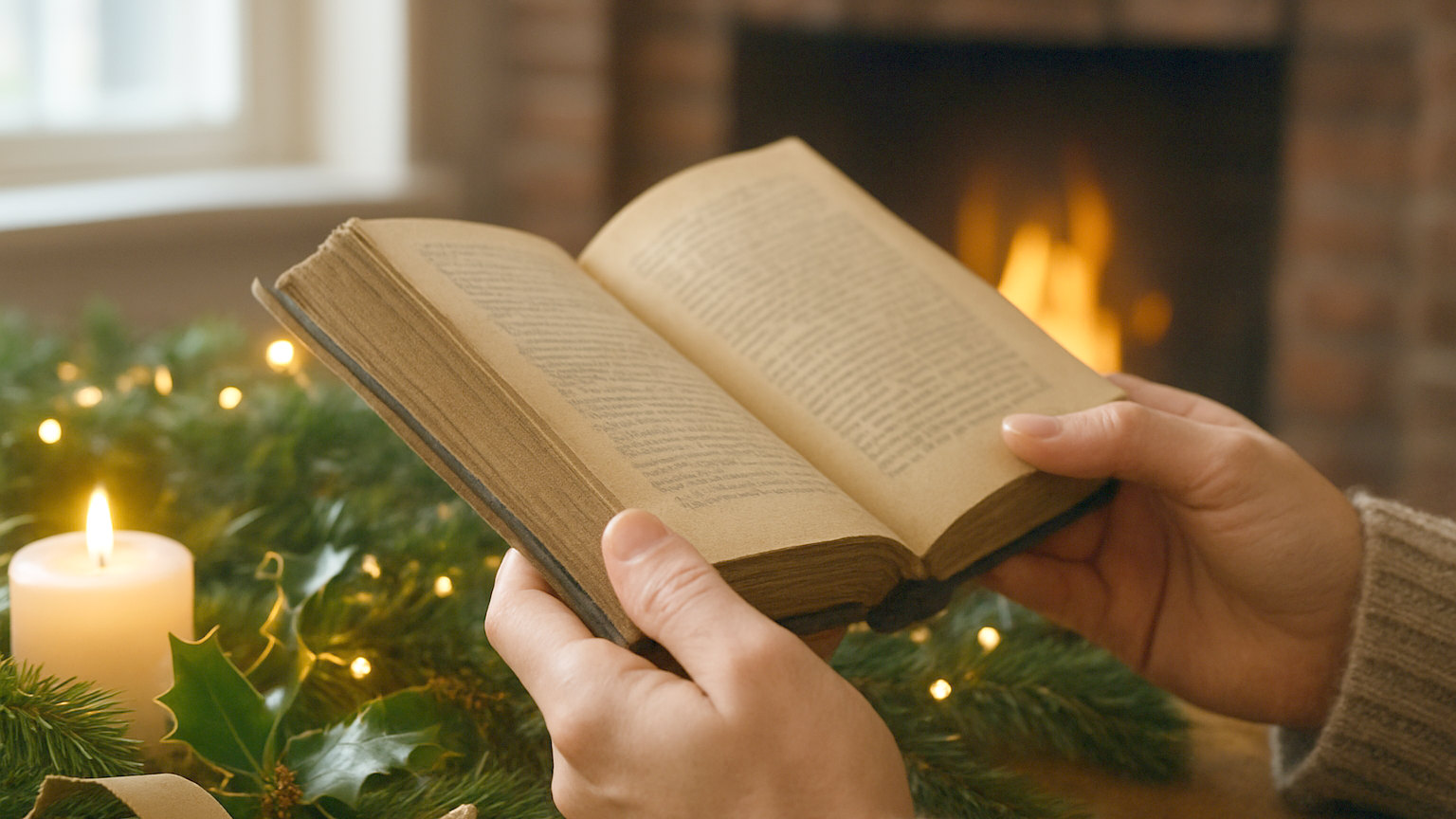
Telling ghost stories at Christmas strikes many people as a contradiction, and it is in fact one of the older and more genuinely traditional things anybody does in December. The association is strong enough that it survives in a well known song lyric that most people sing without noticing what it says, and it has produced a substantial body of English writing.
Where did the tradition come from?
From the season itself, before it was written down. Midwinter is the darkest point of the year, the nights are long, and communities gathered around a fire with nothing to do but talk. Stories of the supernatural belong to that setting in almost every northern culture, and the Christian festival was laid over an existing midwinter one rather than replacing it.
Why is Dickens central to it?
Because his most famous Christmas story is a ghost story, which people forget because the ending is so warm. He wrote several others, and he also edited magazines that published seasonal supernatural fiction, which established the Christmas ghost story as a commercial form. The Victorian revival of Christmas and the Victorian appetite for ghost stories arrived together and reinforced each other.
The best known Christmas story in English is a ghost story. The tradition is not a contradiction; it is the mainstream.
Who else wrote them?
The form reached its height in the late nineteenth and early twentieth centuries, and the acknowledged master is M R James, a Cambridge scholar who wrote his stories to be read aloud to friends at Christmas. That origin shows in the writing, which is paced for a listener rather than a reader, and it is why they still work read aloud a century later.
What about the television tradition?
The BBC ran a strand of adapted ghost stories at Christmas in the 1970s, largely from James, and revived it in later decades. Several are genuinely frightening and all of them are short. They are the easiest entry point for a household that wants to try the tradition without committing to reading anything aloud, and they run to about forty minutes.
How do you revive it at home?
Read one aloud after dinner on Christmas Eve or one of the quiet evenings afterwards, with the main lights off and the tree lights on. Most of the classic stories run to twenty or thirty minutes read at a steady pace. Practise once beforehand, since these were written to be performed and they reward a reader who knows where the pauses are.
Is it suitable for children?
Depends entirely on the child and the story, and the older ones are genuinely frightening rather than mildly spooky. For younger children there is a good body of gentle seasonal ghost writing that works well and is written for the age. For anybody under about ten, previewing it yourself first is worth the ten minutes, since a story read aloud in a dark room lands considerably harder than one on a page.
What else fits the tradition?
Anything atmospheric rather than gory, which is the tone the tradition works in. Folk tales of the winter, which most regions have. Local legends, which are frequently better than anything published because the setting is somewhere everybody in the room knows. Somebody telling a story about the house or the village they grew up in is the oldest version of this and still the best.
What should you read first?
One of the shorter classic stories, read aloud in twenty minutes, which is enough to see whether the tradition suits your household before committing to anything longer. Most of them are out of copyright and freely available.
If it goes well, a collection makes a very good present for somebody who reads, and it is the kind of book that comes off the shelf every December for years.
Whatever you choose, keep it short. Twenty minutes read well beats an hour read patiently, and the tradition survives being left wanting more.


