
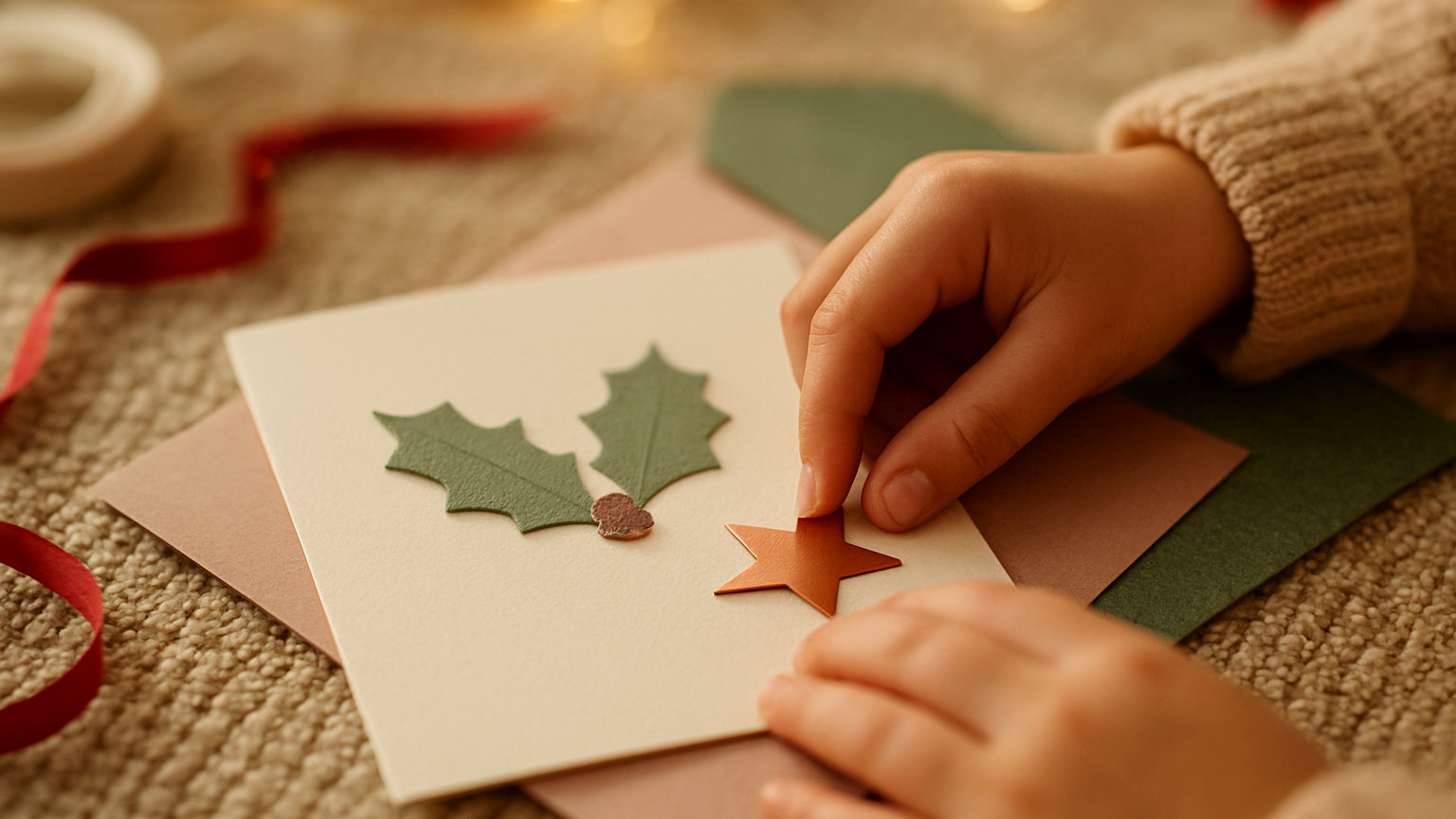
Handmade cards are the ones that get kept, propped on a mantelpiece for a month and then put in a drawer for twenty years. They are also one of the better craft activities because there is a genuine reason for the output, which changes how a child approaches it. The main obstacle is that making twenty individually is a very long afternoon.
How do you set up a production line?
Do one stage across every card rather than finishing each card completely. Fold all the blanks, then do all the printing, then all the details, then all the writing. It is considerably faster, the results are more consistent, and it suits how children work, since doing the same action twenty times is easier at six than following a four step process twenty times.
Which techniques work at which age?
Two to four: handprints, footprints, finger printing, sticking shapes, potato printing. Five to eight: stamping, stencils, collage from old cards, drawing, glitter if you can bear it. Nine and up: anything with a technique, including lino printing, proper lettering, cut outs and folded designs. The younger the child, the more the adult should do the preparation and the less they should do the making.
Do one stage across every card rather than finishing them one at a time. Twenty cards is an afternoon; twenty individual projects is a week.
What is the easiest technique that looks good?
Potato printing, which is genuinely effective and costs nothing. Cut a potato in half, carve a simple shape into the flat surface, dip it in paint and press. Trees, stars and simple geometric shapes all work. A repeated print in two colours across a plain card looks considerably better than most bought designs and a four year old can do it unaided.
What should you use for the blanks?
Card blanks with envelopes are inexpensive and save a great deal of trouble with sizing, particularly for posting. Failing that, A4 card folded in half fits a C5 envelope, and A5 folded fits a C6. Cutting your own from a cereal box works for cards being handed over rather than posted, since the card is heavier and the postage costs more.
How do you handle the writing?
Let them do it, even at four, when it will be illegible. The message is not the point and the recipient will not mind. For a child who finds writing difficult, having them sign only, with an adult writing the rest, keeps it their card without turning a craft into a handwriting exercise. Writing a list of who each card is for before starting avoids the count going wrong.
What about the posting deadline?
It falls earlier than most people remember, and cards posted late arrive after the recipient has taken their decorations down. The current second class and first class dates are published by Royal Mail in the autumn and are worth checking in November. Anything going overseas has a considerably earlier deadline, frequently in the first days of December.
What can you do with the ones left over?
Keep two or three for the unexpected card that arrives from somebody you had not counted, which happens every year. Use the rest as gift tags, or hold them for next December in the craft box. It is also worth keeping one of each design as a record, since a run of homemade cards from age three to age ten is worth having.
What about charity cards?
Worth knowing that the proportion actually reaching the charity varies enormously between designs and retailers, and it is usually printed in small type on the back of the box.
Buying directly from a charity, or making your own and donating what you would have spent, both send considerably more money to the cause than a card bought from a general retailer.
When should you start?
The last weekend of November, which gives time to make them, write them and post them before the deadline without any of it becoming a rush. Cards made in mid December are almost always posted late.
It also spreads the December workload, since the making is an afternoon and the writing and addressing is a separate evening job that an adult can do alone.


