
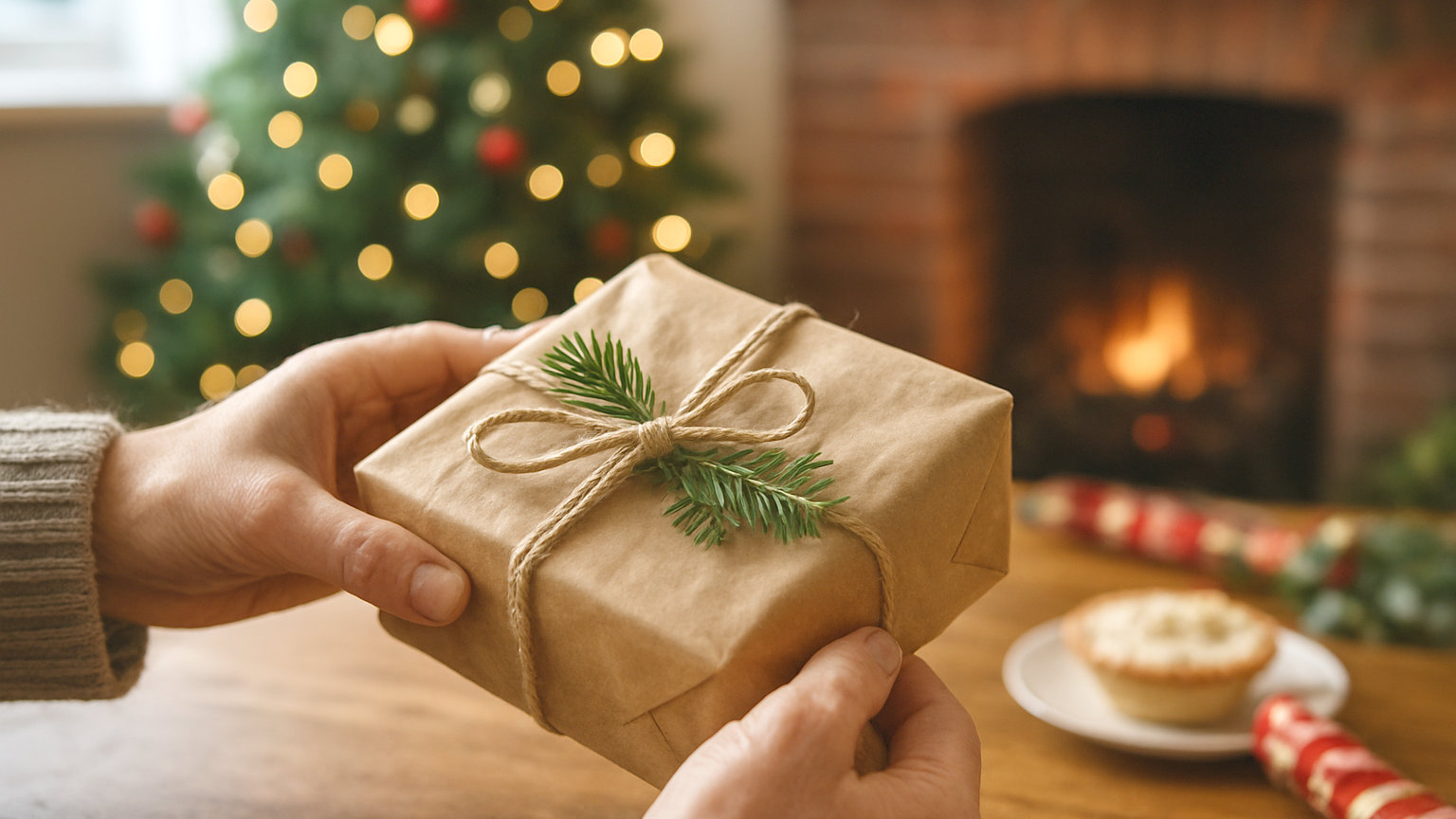
Wrapping is the cheapest way to make an ordinary present look like a considered one, and it is almost entirely a matter of a few small techniques rather than of taste or expensive materials. Plain brown paper with string and a sprig of something costs a fraction of what printed foil paper does and looks considerably better under a tree.
How do you wrap neatly?
Cut the paper to size before you start rather than wrapping and trimming, allowing about three centimetres of overlap on the long seam and enough at each end to reach roughly two thirds up the side of the box. Crease every fold firmly with a fingernail. Fold the raw edge of the overlap under before taping, which hides the cut line and is the single change that makes the most difference.
What do you do about the ends?
Push the sides in first to form two triangular flaps, then fold the top flap down and the bottom flap up, creasing each one hard. The order matters: bottom over top gives a cleaner line. If the paper is too long at the ends it bunches, which is why cutting to size first is worth the extra thirty seconds.
What works instead of shiny paper?
Plain brown kraft paper, which is cheap, strong, recyclable and looks smart with almost any trimming. Newspaper or old maps for a more casual look. Fabric, tied furoshiki style, which is reusable indefinitely. Plain coloured paper with a stamped or potato printed pattern, which is a good job for a child. Any of these read as deliberate rather than economical.
Scrunch the paper to test it. If it stays scrunched it can usually be recycled; if it springs back it contains plastic or foil and goes in general waste.
Which paper cannot be recycled?
Anything with glitter, foil or a plastic laminate, which covers a large proportion of what is sold in December. The scrunch test is the practical way to check. Sticky tape should be removed before recycling, and ribbon, bows and gift bags with plastic handles all go in general waste. Paper based tape and string avoid the problem entirely.
What should you use to trim it?
String or twine rather than curling ribbon, which is plastic and cannot be recycled. A sprig of rosemary, eucalyptus, spruce or bay tucked under the string. A cinnamon stick. A dried orange slice. A tag cut from last year cards. All of these cost nothing and every one of them looks better than a stick on bow.
How do you handle awkward shapes?
Put it in a box first, which is the answer for anything spherical, soft or irregular. Failing that, wrap it in tissue and then in a fabric bag or a wrapped cylinder. A bottle wraps easily by rolling it in a rectangle and gathering the top with string. Nobody has ever successfully gift wrapped a football, and pretending otherwise wastes an evening.
How do you make it faster?
Do it all in one session on a cleared table rather than one present at a time on the floor. Have everything to hand: paper, scissors, tape on a dispenser, tags, pen, string, and a bin bag. Wrap by recipient so you can see when you have finished. An evening in early December with the radio on is far more pleasant than the twenty-third at midnight.
What can children do?
Printing the paper, which is the best job available and turns plain brown paper into something personal. Potato prints, stamps or hand drawn patterns all work and a whole roll can be done in an afternoon.
Older children can wrap properly with a bit of instruction, and it takes a real job off whoever would otherwise be doing forty parcels alone in December.
How much paper do you need?
More than one roll for most households, and buying two of the same rather than several different designs makes the pile under the tree look considerably more deliberate.
A single roll of brown kraft covers almost everything and costs less than one roll of printed paper, with the trimmings doing the decorative work instead.


