
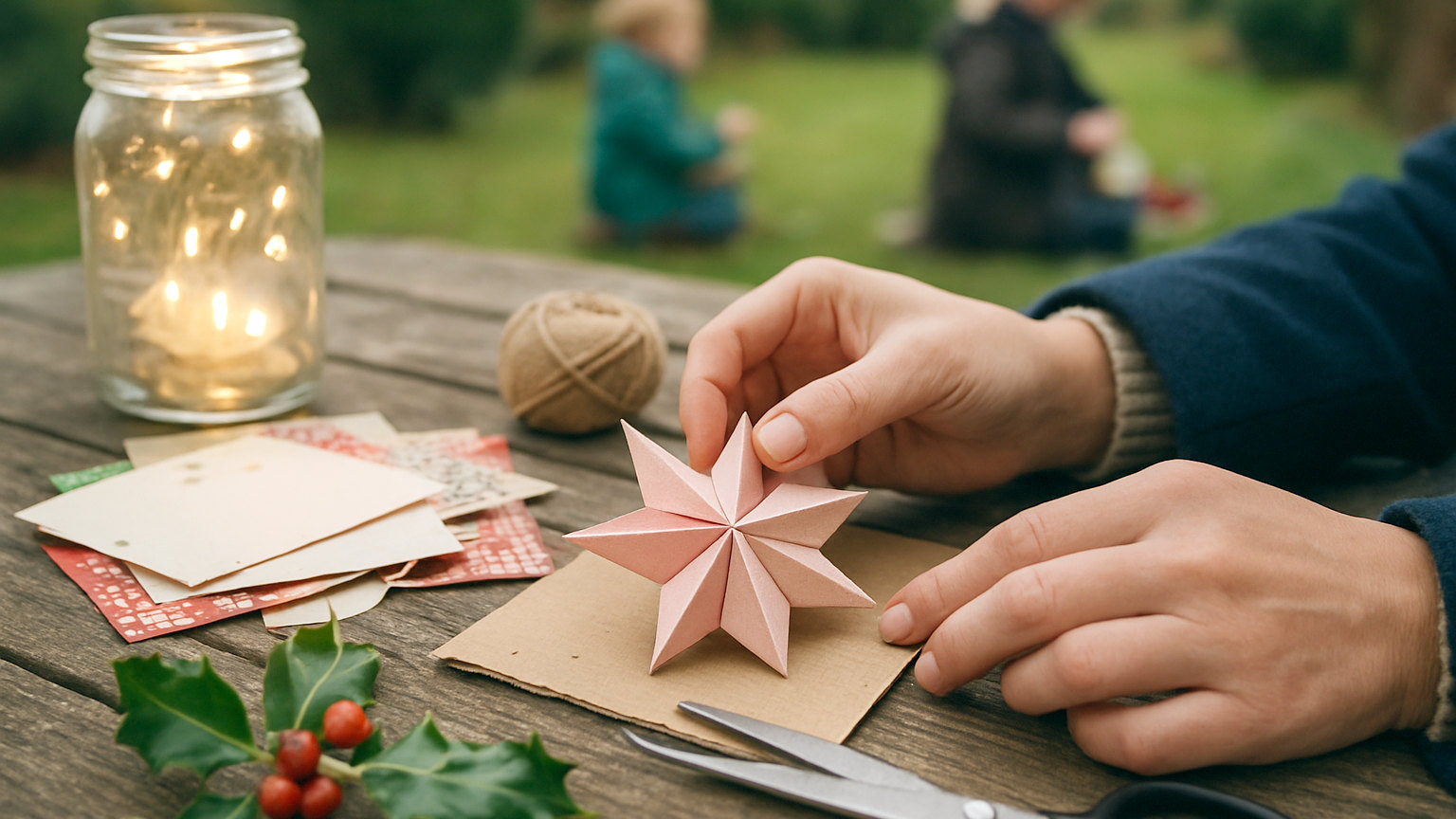
The best craft afternoon usually costs nothing, because the materials are already in the house. Cardboard, old Christmas cards, jam jars, string, foil and whatever is in the drawer will fill several hours and produce things that go on the tree. Buying a kit is quicker to set up and considerably less interesting to a child than a pile of raw materials.
What can you make from cardboard?
Stars, trees and shapes cut from a cereal box and covered in foil or painted. A whole village of small houses, cut and glued, which can sit on a mantelpiece with lights behind. Gift tags. A large box becomes a sleigh, a shop or a den, which is the single best use of any delivery box in December.
What can you do with last year cards?
Cut them into gift tags with pinking shears or ordinary scissors, which is the traditional use and takes ten minutes. Cut out the pictures for a collage or a paper chain. Make a jigsaw by cutting one into irregular pieces. Punch holes and thread them into a garland. Keeping a shoebox of last year cards specifically for this is worth doing.
What can you make with jars?
A lantern, by dropping a battery tealight inside and tying string around the neck, which works indoors and out. A snow scene, using a small figure glued to the lid and water with glitter. A painted or tissue covered lantern for a windowsill. Jars are the most useful thing in a recycling box and they cost nothing.
Put a cloth or newspaper down before anybody starts. Almost every craft afternoon that ends badly ends badly because of the table rather than the craft.
What suits the youngest children?
Sticking and pressing rather than cutting. Paper chains, which are glue and strips. Handprints and footprints turned into reindeer or trees. Pressing shapes into salt dough. Sticking things onto a paper plate. Threading pasta onto string. All of these need no precision and produce something recognisable, which is what matters at three or four.
What suits older children?
Anything with a technique. Paper snowflakes, which reward folding accurately. Origami stars. Sewing a felt decoration. Making a wreath from a coat hanger. Wrapping and decorating presents properly. At this age the satisfaction comes from the result being genuinely good rather than from the doing, so a craft with a clear method works better than free play.
How much mess should you expect?
Glue and paint are the two that spread. Glitter never leaves. PVA washes out of most things and dries clear, which makes it the safest adhesive for a table. If mess is the constraint, choose paper folding, threading or salt dough, all of which produce almost none, and save the painting for a day when the table can be given over to it.
What should you do with the results?
Put them up, all of them, which is the entire point. A tree carrying a decade of these is worth more than any bought scheme. Write the year and the name on the back of anything that will last, since that is the detail nobody remembers later. Anything that will not survive can be photographed and then quietly recycled in January.
What should you keep back for the following year?
A shoebox of raw material collected through the year: last year cards, ribbon, buttons, jars, corks, wrapping paper offcuts and cardboard. It costs nothing to fill and it means a wet afternoon in December needs no shopping trip.
Keeping it with the decorations rather than in a cupboard means it comes out at the right moment, which is the difference between a box that gets used and one that gets forgotten.
Above all, let the child decide what the thing is going to be. A craft afternoon steered towards a particular result by an adult stops being a craft afternoon within about ten minutes.


