
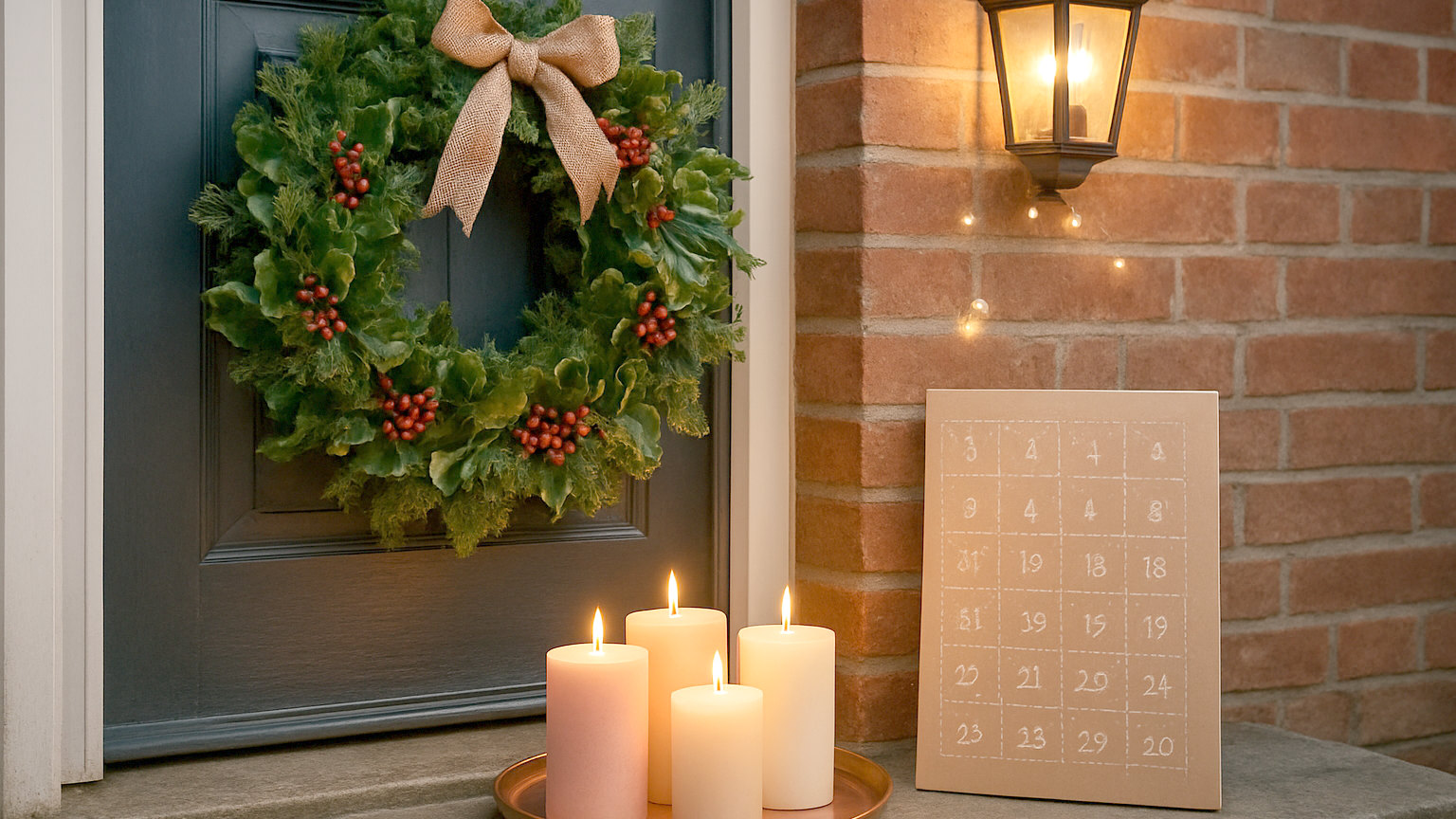
Advent and the advent calendar are not the same thing, and their dates do not match, which surprises a great many people. The calendar starts on the first of December and runs to the twenty-fourth. Advent itself is a season of the church year that starts on a Sunday, moves each year, and does not begin on the first of December except by coincidence.
When does Advent actually start?
On the fourth Sunday before Christmas Day, which is known as Advent Sunday. Depending on which day Christmas falls on, that lands somewhere between the twenty-seventh of November and the third of December. It always ends on Christmas Eve, so the season is between twenty-two and twenty-eight days long rather than a fixed twenty-four.
What does it mark?
It is the start of the Christian church year and a period of preparation and expectation before Christmas. Historically it was a penitential season, closer in character to Lent than to a countdown, with fasting in some traditions. That older meaning survives in the purple used in many churches during Advent, the same colour used in Lent.
Advent Sunday moves each year and the advent calendar does not. They overlap for most of the month and start on different days.
What is an Advent wreath?
A ring of foliage holding four candles, one lit on each Sunday of Advent, so that four are burning by the Sunday before Christmas. Many wreaths have a fifth white candle in the centre, lit on Christmas Day itself. The candles are traditionally purple with one pink for the third Sunday, though plenty of households use whatever they have.
Where did the calendars come from?
Nineteenth century Germany, where the counting of days was originally done with chalk marks, candles or pictures pinned up each morning. Printed calendars with doors appeared in the early twentieth century, and chocolate behind the doors is a considerably later addition, becoming widespread only in the second half of the century. Like much of Christmas, it is a good deal younger than it feels.
Why do calendars have twenty-four doors?
Because they count down to Christmas Eve rather than covering the church season, and because a fixed number is necessary for something manufactured and sold. Twenty-four also fits a neat grid. Some calendars have twenty-five, including Christmas Day itself, which is a more recent commercial variation rather than a tradition.
Does any of this matter for a household calendar?
Not in the slightest, and nobody should feel obliged to align a chocolate calendar with the church year. It is worth knowing mainly because it explains why Advent services and school events start on a date that seems arbitrary, and why some households light candles on Sundays rather than opening a door each morning.
What are the other twelve days?
A separate thing again, and frequently confused with Advent. The twelve days of Christmas run from Christmas Day to the fifth of January, ending at Twelfth Night, which is when decorations traditionally come down. They come after Christmas rather than before it, which means the modern habit of counting down twelve days to Christmas has the tradition the wrong way round.
Is it worth marking at home?
Many households light a candle each Sunday whether or not they attend church, simply as a way of marking the four weeks. It takes two minutes and gives December a rhythm that a daily chocolate does not.
An advent wreath can be made from any foliage on a plate or a ring, and children generally take the lighting of it far more seriously than adults expect.
What about Epiphany?
The sixth of January, marking the visit of the wise men, and the day after Twelfth Night in the most common reckoning. In several European countries it is a bigger occasion than Christmas Day and the day on which presents are exchanged.
It is also the traditional deadline for taking decorations down in Britain, which is why the fifth or sixth of January turns up so often as the end of the season.


