
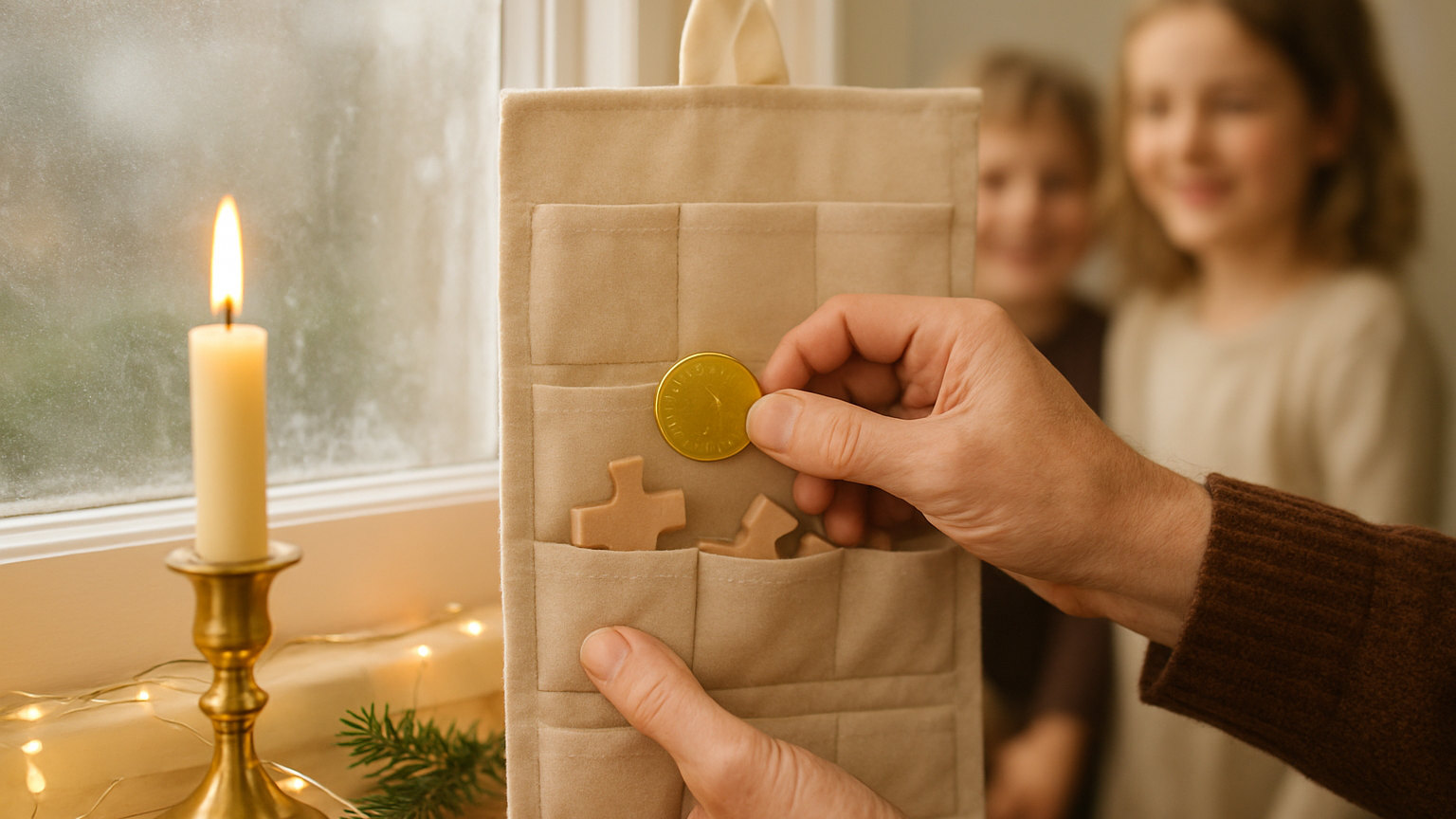
Filling a reusable calendar sounds straightforward until you are standing in a shop trying to find twenty-four small things per child that are not tat. It is also a tradition that escalates: whatever went in last year becomes the baseline, and within three years the calendar has quietly become a month of daily presents costing more than the presents themselves.
What actually fits?
Less than you think, which is a useful constraint. A typical pocket or drawer takes something roughly the size of a matchbox. That rules out most toys and points firmly at slips of paper, sweets, stickers, hair ties, small figures, Lego pieces, pencils, rubbers, badges and coins. Measuring the pocket before shopping saves a great deal of returning things.
What should you spend?
Decide the total for the month rather than the amount per day, since per day thinking is what produces escalation. Twenty to thirty pounds per child for the whole calendar is generous, and a good proportion of that can be nothing at all if some days are activities. Writing the budget down before you start is the discipline that keeps it there.
How do you stop it becoming twenty-four presents?
Mix the types deliberately. Roughly a third activities written on slips, a third small consumables, and a third tiny objects is a good balance. The activity days cost nothing, the child enjoys them at least as much, and they break the pattern of receiving something every morning, which is the habit that makes the escalation feel necessary.
Set a total for the month, not an amount per day. Per day thinking is how a calendar becomes more expensive than the presents under the tree.
What activities work on the slips?
Watch a film. Make paper chains. Walk to see the lights. Bake something. Have pancakes for breakfast. Wear something festive. Phone a grandparent. Stay up half an hour late. Choose the music. Put the tree lights on. Write a card to a neighbour. Each takes one line to write, and matching them to the day means the busy days get the easy ones.
What should go in the last few days?
Something slightly better on the twenty-fourth, which is worth doing since the last door has a bit of ceremony about it. New pyjamas, a book, or the ticket for whatever is happening that evening. Beyond that, keeping the days broadly equivalent avoids the situation where a child works out which days are the good ones and opens them early.
What should you avoid?
Anything with small detachable parts if there is a toddler in the house, since a calendar is opened at floor level by an excited child. Chocolate every single day, which is a great deal of sugar before breakfast in a month that already has plenty. And anything that requires an adult to set something up before it can be used, which does not work at seven in the morning.
When should you buy the fillers?
Across the year, in the same box as the stocking fillers, which spreads both the cost and the effort. The January sales are the obvious moment. Buying twenty-four small things in one trip in late November is expensive and produces the worst version, since you end up buying whatever is in front of you rather than things you chose.
What about several children?
Keep the contents equivalent rather than identical, since children compare doors within about four days. Identical is easiest, and where it is not possible, matching the number of items matters more than matching what they are.
Filling them together in one session in November, with a list of what is going in each, avoids the December morning where one child has a sticker and the other has a chocolate.
And keep a note of what went in each year, since the contents are the part you will have forgotten by the following November and the list saves an hour of thinking.


