
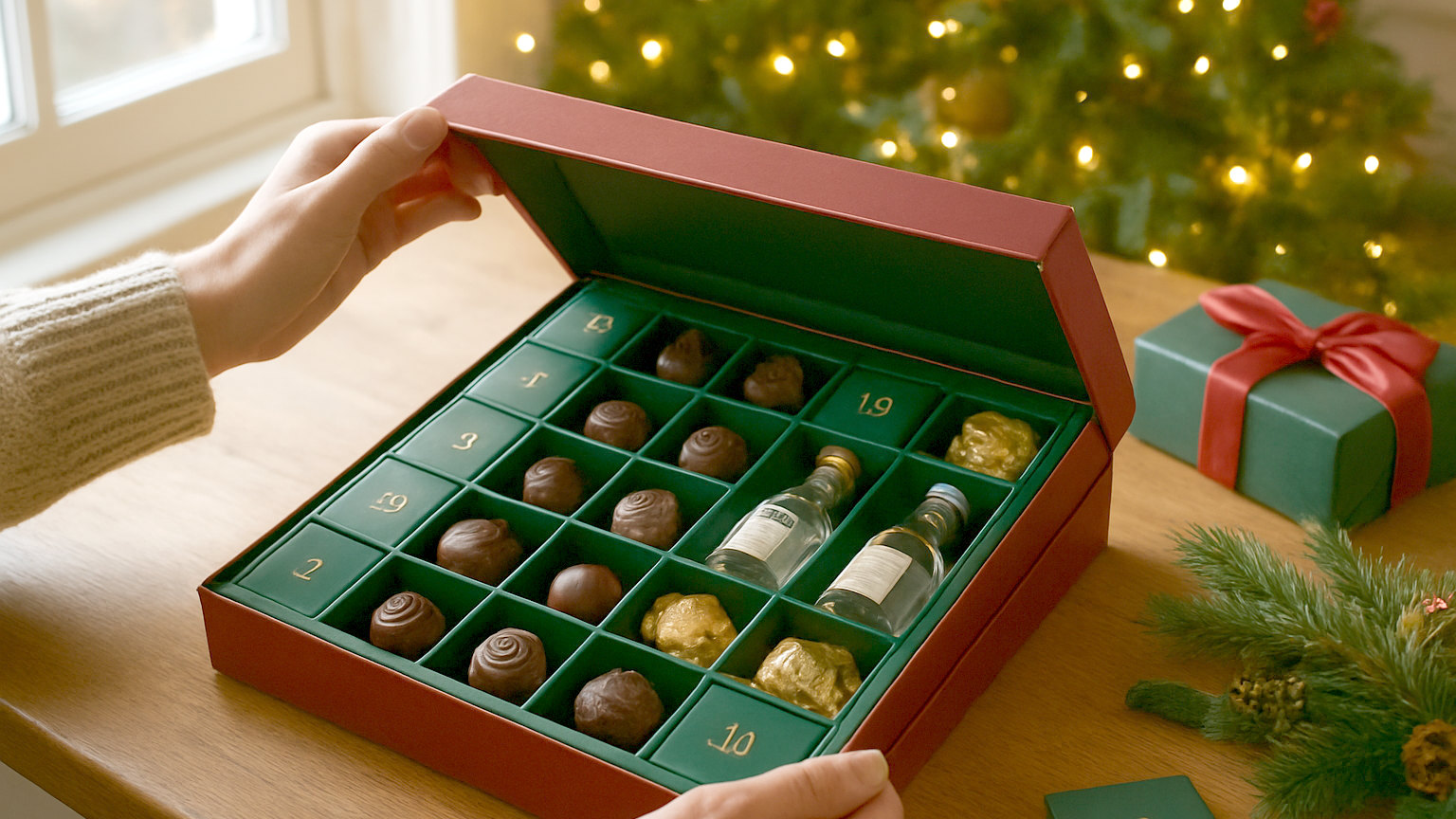
Adult advent calendars have gone from a novelty to a substantial category in about fifteen years, and some of them now cost more than the main present they sit alongside. The value inside varies enormously, and the arithmetic that tells you whether one is worth buying takes about a minute and is almost never done.
How do you work out whether one is worth it?
Find the contents list, which most retailers publish, and add up what the items would cost bought separately at their normal size. Then ask how many of the twenty-four you would actually use. A calendar containing twenty good items and four you will never touch is better value than one containing twenty-four you are indifferent to, regardless of the headline saving.
What is the catch with sample sizes?
That the stated value is usually calculated at the full size price per millilitre, which flatters the total considerably. A five millilitre sample is not a fifth of the value of a twenty-five millilitre bottle in any practical sense, since the packaging and the convenience are much of what you pay for. Look at how many full or near full size items are included, since that is where the real value sits.
Which categories work best?
Anything consumable that gets used up within the month or shortly after. Coffee, tea, chocolate, spirits in miniature, hot sauce, spices. Beauty calendars work if the brand is one they already use, and badly if it is not, since twenty-four unfamiliar products is a month of trying things rather than a treat. Anything that builds towards a set also works well.
Add up what you would actually use rather than what the box says it is worth. The stated value is calculated at full size prices and is not what you are getting.
When should you buy one?
The good ones from smaller producers sell out in October and November, well before anybody is thinking about Christmas. The large retail ones go on sale in the last days of November and are frequently reduced in the first week of December, which is a small gamble worth taking if the calendar is for yourself rather than a present.
Are they a good present?
Yes, with one condition: they have to arrive before the first of December to be used at all, which makes them a poor Christmas present and a good early December one. Handing somebody an advent calendar on Christmas Day is a familiar and slightly awkward moment. If it is going in the post, allow for that when you order.
What about making one instead?
Considerably cheaper and usually better received, because the contents can be chosen for the specific person. Twenty-four small things in numbered envelopes or bags: their coffee, their chocolate, a note, a memory, a voucher for something. A homemade calendar for a partner costs a fraction of a bought one and is the version people remember.
What should you avoid?
Anything where the contents are not published, since that is usually a sign the value does not bear examination. Anything from a brand the recipient has no relationship with. Anything containing alcohol for somebody whose drinking you have not thought about. And anything so expensive that it changes what the rest of Christmas has to look like.
What about calendars for a couple?
A shared one, filled by both people with things for the other, is the version that works best and costs almost nothing. Twelve entries each, alternating days, halves the work and doubles the surprise.
Entries can be objects, notes, or plans for the evening, and the ones people remember are almost always the plans rather than the objects.
What do you do with the packaging?
Most beauty and drinks calendars are heavily packaged in mixed materials that cannot go in a household recycling bin, which is worth factoring in alongside the price.
A few now use recyclable card throughout and say so on the box, and a reusable wooden or fabric calendar refilled each year avoids the question entirely.


