
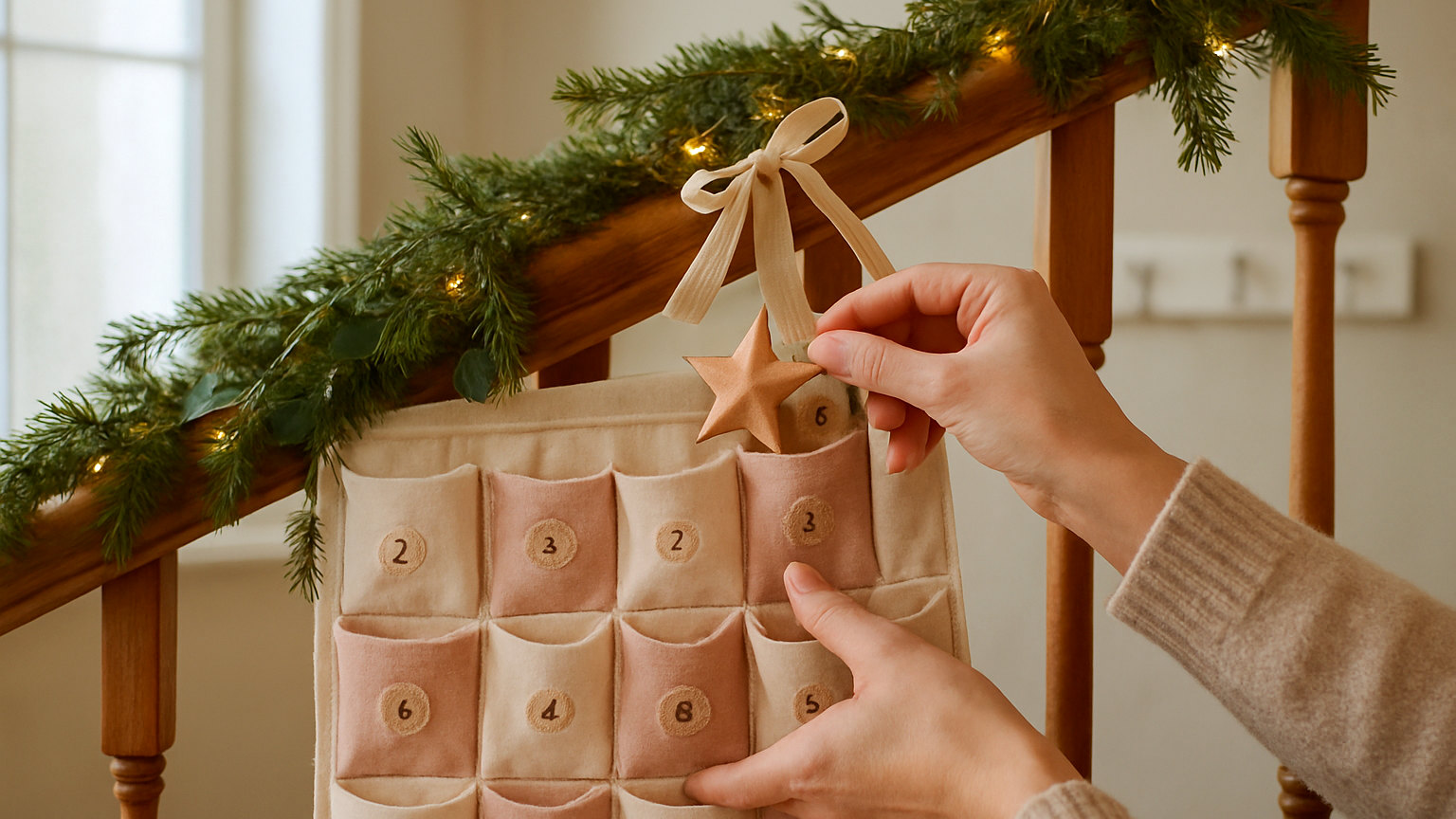
A chocolate advent calendar is twenty-four chocolates eaten before breakfast, which is a great deal of chocolate in a month that already contains a great deal of it. The alternatives are cheaper, more interesting, and in several cases do some of the work of planning December for you, which is the strongest argument of the lot.
What is an activity calendar?
Twenty-four slips of paper in envelopes or pockets, each naming something to do that day. Watch a film. Make paper chains. Walk to see the lights. Bake something. Phone a grandparent. Wear something festive. It costs the price of some paper, and it means the week between term ending and Christmas Eve is planned in advance rather than improvised each morning.
How do you write the activities?
Match them to the day rather than distributing them randomly. Put the effortless ones on days you know will be busy, and save the ones needing a free afternoon for the weekend. Include several that require nothing at all, such as reading a story by the tree lights. Write them after you have looked at the calendar, which takes twenty minutes in November.
What about a book calendar?
Twenty-four books wrapped and numbered, one opened and read each night. Most of them can be books you already own, which makes it close to free, with a few new ones bought second hand. Christmas titles for December work particularly well. It builds a reading habit into the countdown and the books go back on the shelf afterwards for next year.
Whatever you fill it with, an activity calendar plans your December in November. That is worth more than what is behind any of the doors.
What is a kindness calendar?
A small good deed each day rather than a treat: make somebody a drink, write a card to a neighbour, donate a toy, do a chore without being asked, pick up litter on a walk. Several charities publish ready made versions. It suits households uncomfortable with a month of daily presents, and it gives children something to do rather than something to receive.
What else can go in one?
Lego or model pieces building towards something. Craft materials for that day project. A joke a day. A small toy for a collection. Hair ties, stickers, pencils and other small useful things. Tickets and vouchers for things happening later in the month. For adults, tea, coffee, chocolate, miniatures, or a note. Almost anything small works if it fits the pocket.
How do you keep the cost down?
Mix the types. Twenty-four purchased items is expensive; twelve activities, six books you already own and six small items is not. Buying in the January sales for the following year removes most of the cost. And keeping the individual items genuinely small is the whole discipline, since a calendar with a substantial present behind each door has become twenty-four presents.
What if you start late?
Start on whichever day it is and fill from there, which nobody has ever objected to. A calendar begun on the fifth with nineteen doors is exactly as good as one begun on the first. Alternatively use a shorter countdown of twelve days from the thirteenth, which is a legitimate tradition in its own right and considerably less work.
What suits an adult calendar?
The same principle with different contents. Tea, coffee, chocolate, miniatures, bath products or a note a day all work, and a homemade one filled by a partner is considerably better than any bought version.
Activity calendars work for adults too, particularly for a couple, where a list of small things to do together through December is a better present than twenty-four objects.
Whatever you choose, write the contents down as you fill it, since the most common December problem with a homemade calendar is not remembering what is behind the door you are about to open.
How far ahead should you set it up?
The last weekend of November, which gives you time to fill it properly and means it is ready on the first rather than being assembled in a rush on the evening of the thirtieth.
If the calendar contains activities, this is also when to look at the December diary, since the whole advantage of an activity calendar is that the busy days get the easy entries.


