
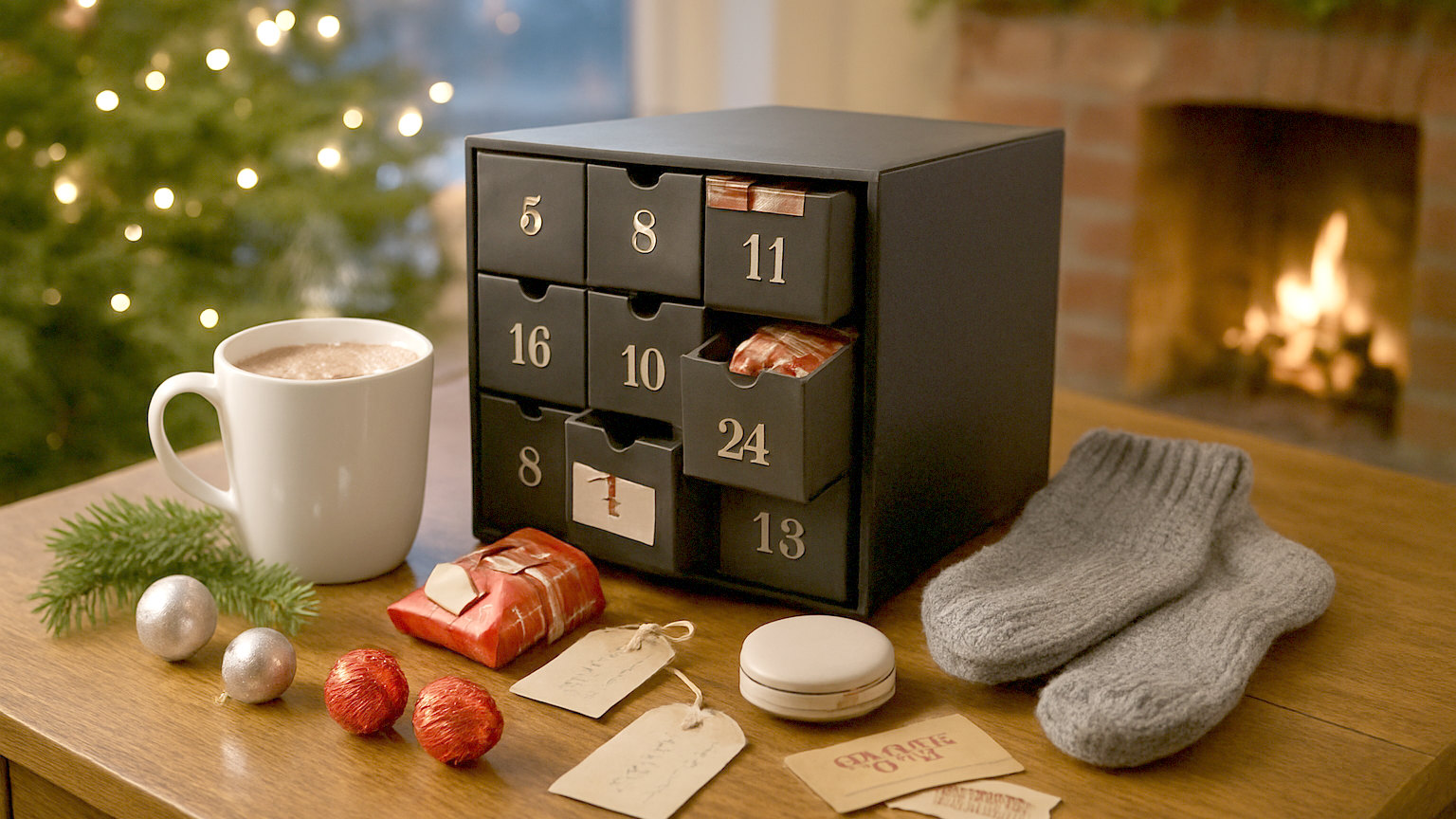
Teenagers still want an advent calendar and almost none of them will say so, which is why households that quietly stop doing them tend to hear about it. What changes is the contents rather than the ritual. The novelty items that worked at eight read as a misjudgement at fifteen, and the fix is not spending more but choosing things that get used.
Why do the childhood fillers stop working?
Because a teenager reads a stickers and plastic figure as evidence that you still think of them as a younger child, which is a sensitive subject at that age. It is not about the money, which they are generally relaxed about. It is about being seen accurately, and a calendar is a surprisingly direct piece of evidence one way or the other.
What should go in it?
Small useful things they will get through within days. A good phone cable, hair ties, lip balm, a decent pen for exams, socks they would choose themselves, earphone tips, a plectrum, a face mask, a proper chocolate bar rather than a novelty one. Small amounts of cash. A gift card of modest value for somewhere they actually go.
What about activity days?
They work at this age too, with the content adjusted. A film of their choice with nobody commenting on it. Ordering the takeaway. Staying up an hour later. Being driven somewhere without a negotiation. Choosing the music. An hour of your time doing something they pick. These cost nothing and several of them are the ones remembered.
Ask them for a list of ten things under a fiver. Most teenagers can produce one in about ninety seconds, which solves the whole calendar and removes every guess.
How much should you spend?
Set a total for the month rather than an amount per day, since per day thinking is what turns a calendar into twenty-four presents. Twenty-five to forty pounds for the whole thing is generous, and a good proportion of that can be nothing at all if some days are activities or cash they were going to receive anyway.
Is money acceptable?
Entirely, and it is frequently the most used item in the calendar. A few pounds behind several doors, or a card for somewhere specific, respects the fact that they know what they want better than you do. It works best alongside physical items rather than as the whole calendar, since the opening is still part of the point.
What should you avoid?
Anything referencing a phase they have grown out of, particularly if it was last year. Toiletries in a scent you chose for them, since this is an age of specific and firmly held preferences. Anything that has to be explained. And anything aimed at improving them, since a calendar containing revision cards is not a treat however sensibly it was meant.
Does it stop at some point?
Later than most parents expect, and in a good many households never. Plenty of adults still receive one. Rather than stopping, change what goes in it and keep the ritual running, since it is one of the few December traditions that survives the transition from child to young adult without needing to be reinvented.
Should they know it is happening?
Ask rather than assume, since a teenager who has decided they are too old for a calendar and is given one anyway will find it awkward, while one who wanted it and did not get it will say nothing and mind.
Framing it as a straightforward question in November, without any weight attached to the answer, settles it and takes about ten seconds.
What about a calendar for a whole friendship group?
Teenagers frequently make these for each other, with each person filling a few days, which costs very little and works considerably better than anything an adult assembles.
If that is happening, the useful contribution is buying the envelopes and staying out of it, since the contents are the part they will enjoy deciding between themselves.


